|
Ethnobotanical Leaflets 13: 215-20. 2009.
Histological and Physico-Chemical Evaluation of Operculina turpethum Linn. Root
Ashok Kumar, B.S1*., Prabhakaran, V2. , Lakshman, K3., Nandeesh, R4, SaleemullaKhan5, ManiTripathi, S. N1., NarayanaSwamy,V.B1. and Subramanyam, P6
1Department of Pharmacognosy, Sri K.V.College of Pharmacy, Chickballapur, Karnataka (India). 2Department of Pharmacognosy, S.V.Polytechnique College, Tirupathi, Andhra Pradesh (India). 3Department of Pharmacognosy, PES College of Pharmacy, Bangalore, Karnataka (India). 4Department of Pharmacognosy, Sree Siddhaganga college of Pharmacy, Tumkur, Karnataka (India). 5Department of Pharmacognosy, Manipal College of Pharmaceutical Sciences, Manipal, Karnataka (India). 6Department of Pharmacology, Sri Padmavathi School of Pharmacy, Tirupathi, Andhra Pradesh (India). *Corresponding author: Head, Department of Pharmacognosy, Chickballapur- 562101, Kolar district, Karnataka. India
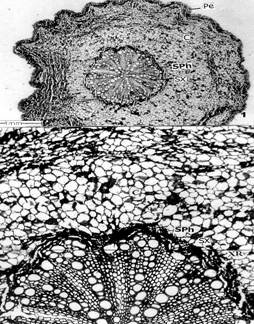
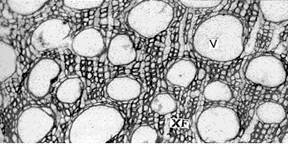
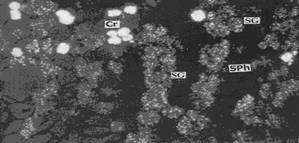
Issued 30 January 2009AbstractOperculina turpethum Linn, belongs to the family Convolvulaceae. It is widely grown throughout India and it is occasionally cultivated in gardens as an ornament. It has been used as a folk medicine in many countries to treat constipation, jaundice, rheumatism, chronic gout, piles and tumors. This paper deals with the microscopic study of young and old root of Operculina turpethum, along with this physico-chemical like ash values, extractive values and preliminary phytochemical analysis were also studied. Keywords: Operculina turpethum, Convolvulaceae, jaundice, old and young root. IntroductionOperculina turpethum Linn (Convolvulaceae) is known as Trivrit in Sanskrit, Tellategada in Telugu and Bili tigade in Kannada. The plant is large climber or winged branches perennial twinner with milky juice, roots are long, slender, fleshy, much branched; stems are very long, twining, angled and winged, pubescent and brown when old. The thin root is about 4 mm in diameter is circular with irregularly wavy outline. The bark of the fresh root is rubbed up with milk and administered as purgative. The active principle of the leaves is a cardiotonic substance named oleandrin. It has anti-inflammatory and stimulant properties. The roots, bark and seeds contain cardio-active glycosides, formerly designated as neriodorin, neriodorein and karabin, which are anti-inflammatory, stimulant and good pain relievers. A paste of the root is used as an external application in hemorrhoids, chancres and ulcerations (Nadkarni, 1976). An oil extracted from the root bark is used in skin diseases of a scaly nature. The fresh juice of leaves is dropped into the eyes for inducing lachrymation in ophthalmia. It is used in the treatment of piles, tumors and jaundice (and Kirtikar and Basu, 1987). Plant contains b-sitosterol, a- and b-turpethin, coumarin, scopoletin, lupeol, betulin (Yoganarasimhan, 2000 and Akthar Hussain et al., 1992). In spite of the numerous medicinal uses attributed to this plant, there is no pharmacognostical report on the anatomical and other physico-chemical standards required for the quality control of the crude drug. Hence the present investigation includes morphological and anatomical evaluation, determination of physico-chemical constants and preliminary phytochemical screening of the methanolic root extract of O. turpethum. ExperimentalPlant material: The whole plant of O. turpethum was collected from surrounding Tirumala hills, Tirupathi, Andhra Pradesh in the month of November. The plant was authenticated by comparing with the specimen by Dr. K. Madhava Setty, Department of Botany, Sri Venkateshwara University, Tirupathi, Andhra Pradesh. A voucher specimen (KVCP104) has been deposited in the herbarium of Department of Pharmacognosy, Sri K.V. College of Pharmacy, Chickballapur, India. Roots were separated, dried and extracted with methanol. Chemicals and Instruments: Toluidine blue, tertiary butyl alcohol, ethyl alcohol, acetic acid, formalin, chloral hydrate, ethanol, hexane, petroleum ether, sodium hydroxide, glycerin, Camera Lucida, drawing sheet, glass slides, cover slips, watch glass, rotary microtome. Nikon Labhot 2 Microscopic unit. Microscopic analysis: The microscopic analysis of root was carried out as described by O’Brien et al., (1964). Physico-chemical analysis: Physico-chemical values such as the percentage of ash values and extractive values were performed according to official methods prescribed Indian Pharmacopoeia, (1996) and the WHO Guidelines on Quality Control Methods for Medicinal Plant Materials (WHO/QCMMPM guidelines, 1992). Preliminary phytochemical screening: Preliminary phytochemical screening of methanolic root extract of O. turpethum was carried out by using standard procedures described by Kokate (1986b) and Harborne (1998). Results and Discussion Microscopic characters Young root (Fig.1): The outer zone has less conspicuous periderm followed by a broad zone of tannin filled parenchymatous cells and wide, thin walled, polygonal compact cells. The cortical cells have no cell contents. The vascular cylinder is roughly circular measuring 1.2 mm in diameter. It consists of continuous narrow circular zone of secondary phloem. The xylem cylinder consists of several thin, uniserinate radial lines of vessels. The primary xylem consists of a central metaxylem element with four or five protoxylem elements. The widest vessel element is 50 mm in diameter. Thick walled fibers surround the vessel elements. Old root (Fig. 2): The old root has broad distinct periderm measuring 100-150 mm thick. The cortex is broad and consists of tangentially oblong, clusters of parenchyma cells and wide circular laticifers. The cortical cells are crushed into dark tangential thing lines. Secondary phloem is a brad continuous zone; it consists of radial lines of sieve elements with wide phloem rays. The sieve elements are narrow, angular and in compact bands. Secondary xylem is a dense cylinder, cleared radially in to wide four or five fan shaped segments by narrow xylem rays. The vessels are mostly angular, the diameter of the vessels ranges from 50-150 mm in diameter. The sclerenchyma elements are thin walled, lignified fibers. Cell inclusion (Fig. 3): Two types of inclusions are seen in the root. 1. Calcium oxalate crystals are in the form of rosettes; they are abundant in the inner cortex. The rosettes are solitary and diffuse in distribution. The largest rosette is 50 mm in diameter. 2. In the phloem rays are see abundant starch grains. The starch grains are compounds and concentric type. The phloem rays, especially in the outer portion are compactly filled with the starch grains. The starch grains are up to 30 mm in diameter. Physico-chemical analysis Sulphated ash value was more when compared with acid insoluble and water soluble ash. Water Extractive value was more then ethanolic extractive value. Preliminary phytochemical analysis Methanolic extract of O. turpethum showed the presence of glycosides, saponins flavanoids, steroids and carbohydrates. ConclusionAs there is no pharmacognostical work on record of this traditionally much valued drug, the present work was taken up with a view to lay down standards, which could be useful to detect the authenticity of this medicinally useful plant. Micro and morphological standards discussed here can be considered as identifying parameters to authenticate the drug. AcknowledgementsThe authors are thankful to Naveen Kiran, K.V., Chairman, Sri K.V. College of Pharmacy, Chickballapur, Karnataka (India), for providing the facilities to carry out the study.
Table 1. Ash values of Operculina turpethum root.
Table 2. Extractive values of Operculina turpethum root.
Table 3. Preliminary phytochemical screening of Operculina turpethum root.
Fig.1. T.S. of Root, C-Cortex, Pe-Periderm, Sph-Secondary phloem, Sx-secondary xylem, XR-xylem ray.
Fig.2. T.S. of Secondary xylem, V- Vessel and XF- Xylem fibers.
Fig.3. Crystals and starch grains in the secondary Phloem ray Cr-Crystals, SG- starch grains and Sph- Secondary Phloem.
References 1. Brain, K.R. and Turner, T.D., (1975). In: the practical evaluation of Phytopharmaceuticals Wright-Scienctechnica, Bristol, a, pp, 4-9. 2. Evans, W.C., (2003). In: Trease and Evans Pharmacognosy, 15th edn., Saunders, London. 545-547. 3. Ghazanfar, S.A. (1994). In: Handbook of Arabian Medicinal Plants, CRC press, Boca Raton, FL. 176. 4. Harbone, J.B., (1999). Methods of extraction and isolation, In: Phytochemical Methods, Chapman & Hall, London, .60-66. 5. Kokate, C.K., (1986). In: Practical Pharmacognosy, Ist ed., Vallabh Prakashan, New Delhi. 111.
8. WHO/QCMMPM, (1992). Quality Control Methods for Medicinal Plant Material, Organisation Mondiale De La Sante, Geneva, pp. 22-34.
|