Ethnobotanical Profile of Utror and Gabral Valleys, District Swat, Pakistan
Muhammad Hamayun1, Sumera Afzal Khan2, Ilyas Iqbal3, Gohar Rehman4, Tariq Hayat5 and Mir Ajab Khan6
College of Agriculture and Life Sciences, Kyungpook National University, Korea
Centre of Biotechnology, University of Peshawar, Pakistan
3Malakand University, Chakdara, NWFP, Pakistan
4Govt Post Graduate College Mardan, NWFP, Pakistan
5GIK Institute, District Swabi, Pakistan
6Department of Biological Sciences, Quaid-i-Azam University, Islamabad, Pakistan
E-mail: [email protected]
ABSTRACT
Present studies were carried out to investigate ethnobotanical profile of Utror and Gabral. The twin valleys are located in the remote north western part of District Swat. The area is gifted with diverse and unique flora as it is adjacent to the confluence point of Himalayas, Hindu Kush and Karakorum. The people are mostly poor, illiterate and depend upon plant resources for their domestic needs. The inhabitants of Utror and Gabral utilize 176 plant species for more than 42 domestic needs. Based on their type of usage, the major usage types include 133 medicinal plants, 29 fuel wood species, 33 fodder species, 24 vegetables and pot herbs, 18 veterinary medicinal plants, 19 fruit yielding plants, 16 spices and condiments, 8 for construction and timber requirements, 10 ornamental plant species and 8 used as mouth wash (Maswak). Other miscellaneous uses of plants include aesthetics sense (1 sp.), anti lice (2 sp.), agricultural tools (8 sp.), thatching and roofing (5 sp.), baskets making (2 sp.), brooms (2 sp.), bridges (3 sp.), cosmetics (3 sp.), dye (2 sp.), dish cleaner (2 sp.), home decoration (2 sp.), feed (1 sp.), fencing (10 sp.), fish poison (2 sp.), furniture (8 sp.), honey bee attractant (8 sp), match industry (2 sp.), mythological use (6 sp.), naming (9 sp.), narcotic (3 sp.), oil (3 sp.), packing material (2 sp.), poisonous plants (6 sp.), ropes (2 sp.), anti snake and scorpion bite (5 sp.), soil binder (1 sp.), sticks/handles (3 sp.), snuff ash (1 sp.), shade tree (3 sp.), sport tools (1 sp.), tea (1 sp.) and utensil making (3 sp.). Most of the plants are used for multiple purposes. Some plants are also sold in the local markets, thus providing an additional source of income.
Key words: Ethnobotanical profile, Utror and Gabral, Hindu Kush-Himalays, Traditional medicine, District Swat
INTRODUCTION
1. Utror and Gabral Valleys
Utror valley is situated between 35 20 to 35 48 N latitudes and 72 12 and 72 32 E longitudes. The population of Utror is 6888 and the area of the valley is about 47400 hectares. Utror valley is surrounded by Gabral and Bhan valleys on the east, upper Dir district on the west, Kalam valley on the south and and Gabral valley on the north. It is 15 km from Kalam, the centre of Swat Kohistan. The altitude of the valley at Utror proper is 2300 meters and reaches to 2900 meters at Kandol Lake.
Gabral valley lies between 35 20 to 35 48 N latitudes and 72 12 and 72 32 E longitudes over an area of about 38733 hectares. The population of Gabral is 3238. The valley is surrounded by Chitral District in the north, Utror valley in the south and south west, upper Dir district in the west and Bhan and Mahodand valleys in the east. It is 5 kms distant from Utror proper and 20 kms from Kalam. The altitude of the valley ranges from 2580 metres at Baila to 5160 metres at Karkaray Lake top.
Both Utror and Gabral valleys are parts of Swat Kohistan. Kohistan means land of mountains in Persian language. There are three areas under the name Kohistan. These include Indus kohistan lying on both banks of river Indus from Chilas down to Bisham, Swat kohistan in the north of Swat valley with Kalam as its centre and Dir kohistan at the north of Dir valley (Inam-ur-Rahim and Viaro, 2002).
1.1 Physical Geography
The valleys of Utror and Gabral lie in the Hindukush mountain ranges but climatically they resemble the bordering Himalayan mountain range. The Himalayas on the western side of river Indus are divided in to Karakoram and HindKush. The area shows a typical vegetation of eastern Irano-turanian type (Ahmad and Sirajuddin, 1996). The physical geographers term these mountains as Hinduraj, a part of Hindu-Kush. Climatic geographers term these mountains as Trans- Himalayas on the basis of climate and vegetation similarity to that of Himalayan region.
The area occupies a unique location as it is present at the confluence of Himalayas, Hindu-Kush and Karakorum mountain ranges (Hamayun et al. 2003).
1.2 People
Kohistanis (Utroris)
The people of Utror and some parts of Gabral are called kohistanis as they belong to the Kohistani Dard tribe. The kohistanis are the main land owner group. The Kohistanis are believed to be the remains of the previous occupant tribes of the main Swat valley before the invasions of Pukhtoons. The kohistanis seldom migrate along with their families to the lower areas. All kohistanis are believed to be of the same ethnic origin. The kohistanis are the main ethnic group of the Kalam tehsil. They inhabit Kalam, Utror, Ushu and adjoining areas of Dir kohistan like Thal, Lamuti, Kalkot etc. The population of kohistanis are estimated to be 60,000 to 70,000 in Swat and Dir District. The kohistanis are the land owners and share holders of the forest. Some kohistanis tribes also live on the eastern bank of river Indus but they are different from those of tehsil Kalam as their language is more like that of people of northern areas and Kashmir.
Gujars
Gujars are the major ethnic group of Gabral valley. They also own lands in Gabral but got no share in forest revenues. The Gujars living in the area are actually a part of the strong and influential Gujar tribe which reside in different parts of Pakistan especially in Punjab. The population of Gujars in Gabral and adjacent localities of Dir kohistan ranges to few thousands only. Gul Abad is the main town of Gujar Gabral. Gujars spent summer season in Gabral while in winter most of them migrate to lower areas along with their families.
Ajars
The Ajars do not own lands and spend nomadic way of life. They lease grasslands from Utroris for their herds during summer season. In winter they migrate to lower warmer areas of Swat and Dir kohistan. They also work as peasants in Utror and Gabral.
1.3 Women Status
The women living in twin valleys lead a miserable life as they are considered inferior to men. The women are almost 100 % illiterate and have no right in decision making affairs. Women are working very hard from morning to night. Women take care of the children, cook, clean, washing, stitch clothes, collect fuel wood, cut grass, fetch water, rear livestock and assist their men in farming activities. A girl has to accept her parents decision in the choice of partner for marriage. In some cases the girls are also sold. This traditional male domination can be countered with education and awareness, but this is not an easy task as the area still got no single functioning girls school, as local population is opposed to such activities.
1.4 History
The predecessors of the kohistani speaking people are most likely the same as the Gawri, who inhabited the lower more fertile parts of district Dir from the days of Alexander the Great. In 11th century A.D. the area was conquered by the forces of Mehmud of Ghazna and the indigenous population was thus forced to flee to the remote and inhospitable upper mountains. Local traditions confirm that from there groups of Gawri settlers crossed the mountain passes in to Utror, Kalam and Ushu valleys which are now parts of District Swat, while the rest remained in the upper Panjkora valley of district Dir.
During 14th century A.D. the Yousafzai tribe of Pukhtoons attacked the lower parts of Swat and Dir districts forcing the already resident Pukhtoons to flee to the upper parts of Swat and Panjkora valley. Under the influence of these new immigrants, Kohistanis converted to Islam, probably in 15th or 16th century (Baart, 1997). As the new immigrants belong to Hanfia School of Islamic law, subsequently the new converted kohistanis also belong to the same group of Sunni Muslims.
The kohistanis enjoyed large degree of political independence for many centuries. After independence of India from British rule, the area came under the rule of Wali (former ruler of Swat) in 1947. At that time swat was an autonomous state. The Wali (commonly called Baachaa Sahib of Swat) built roads, schools and hospitals in the area. During the reign of Wali Sahib, the area witnessed great development like other parts of Swat. The kohistan area was finally incorporated with Pakistan in 1969.
The residents of Utror and Gabral still enjoy semi independent status as the Government is unable to exert her direct and efficient control due to its remoteness and partly because of local traditions and tribal system. The administration does not enjoy enough influence and authority in the area and the tribal traditions still take precedence over official Pakistani law.
1.5 Socio-economic Conditions
The people of Gabral and Utror are poor and the area is highly underdeveloped. Local people are primarily farmers or tenants. They also rear livestock. Some thirty years back, potato was introduced as cash crop in the area. Its cultivation was soon started in the area on commercial basis. Potato produced in the area during summer season provides back bone of local economy as it is exported to different parts of the country. Now a days two crops of potato are taken annually. Beside potatoes, turnip and cabbage are the other notable cash crops of the area. Maize crop, beans and peas are also cultivated in the area.
Fruits are also exported from the area. These include apples and walnuts. Some people collect medicinal plants and morels and sell it in local markets, thus earning their live hood. The people also get their share in forest revenues from the government.
During winter (December, January and February) season all activities stops due to heavy snow fall and the area comes under a thick blanket of snow. Locals travel to Mingora, Peshawar, Rawalpindi, Lahore and Karachi to earn their livings.
In late 80s there has been an explosive growth of tourism in Kalam. There are more than 150 hotels in Kalam presently. Tourism greatly improved the socioeconomic conditions of the area by providing job opportunities to local people. Local people work in hotels and restaurants, work as guides and jeep drivers, while some has opened shops in Kalam. In Kalam, most of the hotels are owned by outsiders and as a result most of the profit from tourism leaves the area.
1.6 Health and Education
The area is also far behind in health and education sectors from the rest of the district Swat as the government is not paving attention to these basic and most important human requirements. There is only one government dispensary in Utror and one basic health unit (BHU) in Gabral. Even at these two centres most of the pertinent staff remains absent and life saving drugs are often not available. People thus carry their patients to Kalam or Mingora. Large numbers of patients die on their way to Kalam and Mingora as the roads are either absent or in very bad condition due to land sidings and snow cover.
Literacy rate is very low in Utror and Gabral. The literacy rate of Utror and Gabral is 19.2 % and 17.7 % respectively (District Census Report, 1998). There is one high school (Utror) and twelve boys primary school in the twin valleys. For girls, one middle school and a primary school are present. One school is also opened in Utror in private sector. In government schools due to lack of teaching staff and facilities, the quality of education is second to none. The girls schools are also in desperate condition in Utror and Gabral. Poor economic conditions and traditional mindset also resulted in low literacy rate in the area.
1.7 Languages
Kalam Kohistani
Kalam kohistani or simply kohistani language is spoken in entire Utror valley and some villages of Gabral valley. Kohistani is one of about two dozen languages that are spoken in the mountain areas of northern Pakistan. Kohistani language belongs to the kohistani branch of the Dardic group of languages. Dardic languages belong to the Indo-Aryan language group which means that they are genetically more closely related to Urdu, Punjabi and Sindhi, than for instance to Pashto and Baluchi, the latter two being Iranian languages (Baart, 1997).
Pashto is the predominant language of lower Swat up to the town of Madyan. Travelling upward, one enters in to Behrain area where Torwali is the dominant language. Moving further up, Torwali language is replaced by Gujari as the dominant language in the villages of Asret, Laikot and Peshmal. Finally, one reaches to the boundary of kalam tehsil (a tehsil is an administrative area with in District), where kohistani is the predominant language.
Kohistani speaking area in Swat is divided in to three major clusters of villages, eah named after its principal village. The lower cluster is Kalam proper; up from Kalam there is the Utror cluster in the west and Ushu cluster in the northeast. The dialects of these clusters are somewhat different but all three are very much the same language (Baart, 1997). In upper parts of Dir Kohistan, the same kohistani language is spoken in Thal, lamuti, Barikot, Biar, Kalkot and Patrak villages.
Gujro
The Gujars and Ajars speak Gujro or Gujri language. The Gujri is very close to Punjabi language indicating their close ethnic relations with the Gujars of Punjab. Gujri grammatically resemble North Indian Prakrat group of languages, however it has borrowed most of the nouns from Pushto language.
Pashto
Virtually all men and lesser number of women speak Pashto as a second language in Utror and Gabral valleys. Pashto in reality is lingua franca of district Swat.
1.8 Major Species Composition and Forest Types
In any area the composition of species greatly depends upon altitudinal variations, northern and southern aspects, slope gradient and soil conditions. Natural happenings like fire and avalanches and human activities also greatly shape the species composition of an area.
In Utror and Gabral, 15928 hectare of land is under forests. In these forests, Abies pindrow Royle (Chokar) is the dominant species comprising 58% of the standing volume, followed by Picea smithiana (Wall.) Boiss. (Rawn) comprising 20%, Cedrus deodara (Roxb. ex. Lambert) G. Don (Loo) comprising 14% and Pinus wallichiana A. B. Jackson (Peeuch) comprising 8% respectively among the coniferous species (Stucki and Khan, 1999).
The vegetation of this dry temperate zone can be classified in to
1. Scrub and broad leaved forests
2. Blue pine forests
3. Abies and Picea forests
4. Open pasture land
1.9 Forest ownership in Kalam Kohistan
Forests in Kalam kohistan are divided among three dominant communities of Kalamis, Utroris and Ushuwals of the same ethnic origin as per already established tribal system. The boundaries, not yet demarcated are known to all the concerned communities. However there are still some disputes between the Kalamis and Utroris on the ownership of some areas in Desan forest. Decision to this effect is still pending in the court.
Every community is entitled to allow grazing facilities to nomadic Ajars in their own forests on payment and the revenues thus obtained is distributed among the community members by their elders called Maliks.
1.9.1 Distribution of Royalty
According to legislation, 60 % of the sale value of forest in Kalam kohistan is paid to the local right holders as royalty. Every community gets the royalty of its own forest and further distribution is made among the tribes of every community according to their own internal distribution system.
1.9.2 Present Internal Distribution System in Utrori Community
The Utrori community resides in Utror valley and some parts of Gabral valley. The royalty from the forest revenues is first divided in to two big tribes, Narrat and Darakhel equally. Distribution of forest revenues among the tribesmen is made on the basis of equal share for each male.
Share of Narrat is then equally distributed among three sub sects of Narrat namely, Sangerkhel, Langerkhel and Jogarkhel. Share of Darakhel is equally divided among four sub sects of Darakhel. These are, Jalator, Funderkhel, Ushugi and Chara.
1.9.3 People who are not entitled for Getting Royalty
People who migrated from other areas and permanently settled in Utor and Gabral are not considered to be the bonafide residents and therefore they do not get any share in royalty. Families migrated from Indus kohistan, Malizai (migrated from district Buner), Gujars and other nomadic tribes are included in this group.
More over, the person entitled for royalty can sell his share and after that he is no more entitled to get royalty. Further more, those who have sold their share to people of their own community, are not deprived of rights other than royalty. They can graze their live stock in forest; collect fire wood and free grant of local quota of trees etc. The purchaser gets only the share of royalty.
1.10 Climate
The area has a typical dry temperate zone climate. The winter season is very cold and as a result most residents o the upper parts migrate to lower areas along their live stock. These migrants return on the onset of spring. The coldest months are December, January and February during which snow falls are frequent. The valleys remain under snow cover for about four months. The snow started melting in March. June, July and August are the hottest months of the year while during September and October, the climate is very pleasant. Rains are received in large amounts during March and April. The summer and autumn are relatively dry seasons.
Mean annual maximum temperature is 61.9 F.
Mean annual minimum temperature is 39.37 F.
Mean annual snow fall is 331.01 cms.
Mean annual rain fall is 52.43 cms. (Stucki and Khan, 1999)
1.11 Rivers and Streams
Utror river is the main river of Utror and Gabral valleys which meets Ushu river at Kalam, thus giving rise to Swat river. While moving from Kalam upward, the major tributary of Utror river is Anakar river from Anakar valley. Utror river is formed by the combination of Ladu river and Gabral river near the village of Utror. Ladhu river is originally arisen from the famous Kandole Lake. Desan khawar and Battal khawar are the notable tributaries of Ladhu river. Gabral river has arisen from Gabral Sin and Gul Abad Sin.
2. ETHNOBOTANY
John Harshberger used the term ethnobotany for the first time in 1896, to study the plants used by the primitive and aboriginal people. Since then it has been defined as the traditional knowledge of indigenous communities about surrounding plant diversity and as the study of how the people of a particular culture and region make use of indigenous plants. Ethnobotany includes all sorts of relationships between people and plants. The definition of ethnobotany can be sum up in four words i.e. People, Plants, Interactions and Uses. "Ethnobotany is the study of how the people of a particular culture and region makes the use of indigenous plants", while the ethnobotanist explores how plants are used s food, shelter, medicine, clothing, hunting and in religious ceremonies. It is the science, which studies "the relationship between a given society and its environment and in particular the plant world".
Ethnobotany moved on the understanding of knowledge systems through the use of anthropological methods and the work of Conklin (1954, 1957) who coined the word ethno sciences, and the work of the famous anthropologist Levi Strauss (1962) which highlighted the structural relationships between each society and its environment, followed by the work of many other anthropologists such as Berlin et al. (1974) and Ford (1978). Further avenues were explored by other researchers who began to develop quantitative methods for estimating amounts of products used, the distribution of useful species, or the relative importance of different values of products to people (Prance et al., 1987; Phillips and Gentry, 1993 a and b; Caballero, 1992; Hoft et al., 1999). Besides developing quantitative methods, ethnobotany has moved towards a wider approach, including other aspects of the natural world. Ethnobotanists quite often identify themselves more and more as ethnobiologists because these disciplines offer more opportunities to analyse human interactions with the overall environment as well as peoples relation to external factors such as the impact of trade systems on local economies and ways of life (Lama et al., 2002).
In the last 100 years, the science of ethnobotany has progressed and the trend is shifting from mere documentation process to a more practical one which emphasize on conservation and sustainable use of plant resources.
2.1. Applied Ethnobotany
Early ethnobotanical work and indeed much even today was often purely descriptive, concerned primarily with making lists of plants used for various purposes, together with their local names. Such study has been of little direct use for conservation or rural development.
In applied ethnobotany, the core subjects are practical problems related to conservation and sustainable use of plant resources, including the pressure imposed by trade on medicinal plants and the right of communities to use plant resources in protected areas.
The two fundamental strengths of applied ethnobotany are
To allow the knowledge, wisdom and practices of local people to play fuller roles in identifying and finding solutions to issues of conservation and sustainable development.
Local people are fundamentally involved in all stages of research and practical follow-up, so there is a better chance of buy in and more robust solutions (Hamilton, 2002).
2.2 Status of Ethnobotany in Pakistan
Pakistan is one of the few places on earth with such a unique biodiversity, comprising of different climatic zones with a wide range of plant species. In Pakistan, ethnobotany is introduced quite recently. Recently, the subject of ethnobotany was included in the curricula of some universities and some students of PhD in ethnobotany were financially assisted under the auspices of ethnobotany project, WWF-Pakistan. Some projects have been also launched for documentation as well as sustainable use of plant resources despite of the fact that Pakistan presents very rich and diverse flora due to her diverse climatic, soil conditions and multiple ecological regions. Pakistan has four phytogeographical regions, the uniregionals, consisting of Irano-Turanian (46%), Sino-Himalayan (10%), Saharo-Sindian (9.5%), and Indian element (4.5%). The country has about 6,000 species of wild plants of which about 400 to 600 are considered to be medicinally important (Hamayun et al., 2003).
The northern areas of Pakistan with unique biodiversity due to the presence of Himalayas, Karakorums and Hindu-kush mountain ranges are under tremendous pressure from locals because of illicit cutting of valuable plants, poor collection and storage methods of medicinal plants, smuggling of timber wood, over grazing, corrupt forest officials, illiterate population with no sense or lust for conservation and above all passive and non practical policies of government as well as NGOs working in the area (Hamayun et al., 2003).
MATERIALS AND METHODS
Present study was carried out during April 2001 to April 2004. During this time the project area was visited once a month for collection of data pertinent to ethnobotany, conservation and plant diversity of the area. Each study trip was well planned and executed effectively.
The research project was completed in three phases. These include literature collection, field trips for data collection and documentation of the data obtained from Utror and Gabral.
Field Work
Field work was carried out in order to investigate the ethnobotany, plant diversity and conservation status of the flora of Utror and Gabral valleys, Swat. The field work includes interviews, observations and guided field walks / transects walks. Two methods were frequently used during the field work.
A. Observations
This method is based on observations in the field conditions. These observations were made while visiting different villages. During this process, local methods of medicinal plants collection, storage, drying, harvesting time, processing and utilization were observed and noted. In the mean time all the plants during flowering/fruiting stage, were collected, pressed and preserved.
B. Interviews
During field work, interviews were conducted with the local inhabitants, selected informants, the herbalists hakims (local physicians of eastern system of medicine), pansaries (medicinal plants sellers in the local markets). Questionnaires were adopted during the surveys in order to get qualitative and participatory approach about the plant resources and their utilization by the local people (Annexure 1). Questions concerning the utility of different plants, quantity of plants used, rate of consumption, availability, economics/market value and fuel wood /fodder head loads had been asked.
Ethnobotany
The plants of ethnobotanical importance were collected and classified on the basis of their utility in the area. Local people including plant collectors and other on the basis of age group were interviewed for ethnobotanical information of the area. The timings for field work were selected according to the growth and collection season of the plants. Population size and its distribution, languages, ethnic affiliation, history of settlement, major social groups or classes, productive activities, subsistence crops, migration trends etc. were also explored during the field work.
RESULTS
The result shows that the inhabitants of Utror and Gabral for various domestic needs utilize 176 plant species belonging to 66 families. These ethnobotanically valued plant species include Dicotyledons (148 sp.), Monocotyledons (14 sp.), Gymnosperms (8 sp.), Pteridophytes (3 sp.), Fungi (2 sp.) and Algae (1 sp.). The dicotyledons include 54 plant families of which Asteraceae (15 sp.), Lamiaceae (10 sp.), Rosaceae (11 sp.), Ranunculaceae (8 sp.), Solanaceae (7 sp.) and Apiaceae (5 sp.) were the most represented families. The monocotyledons comprised 5 families; family Alliaceae (3 sp.), family Araceae (2 sp.), family Dioscoraceae (1 sp.), family Liliaceae (4 sp.) and family Poaceae (4 sp.). Gymnosperms were represented by 3 families, Ephedraceae (2 sp.), Pinaceae (4 sp.) and Juniperaceae (2 sp.). Pteridophytes were represented by 2 families namely Adiantaceae (2 sp.) and Pteridaceae (1 sp). Fungi and Algae were represented by 1 family each i.e. Helveliaceae (2 sp.) and Cladophoraceae (1 sp.) respectively (Table 3).
Most of these potential plant species exhibit multiple uses. The multi purpose plants include Indigofera heterantha Wall. ex Brand (9 local uses), Juglans regia L. and Abies pindrow Royle (8 uses), Olea ferruginea Royle, Punica granatum L., Morus alba L. and Morus nigra L. (7 uses each), Pinus wallichiana A. B. Jackson, Quercus dilatata Royle, Ficus carica L. Cedrus deodara (Roxb. ex Lambert) G. Don. (6 uses each), while Rosa moschata J. Herm., Prunus domestica L., Coriandrum sativum L., Buxus wallichiana Baill, Allium cepa L. and Aesculus indica (Wall. ex Cambl.) H. K.f. showed 5 different local uses each.
Some major uses of potential plant species of Utror and Gabral are discussed in detail.
1. Medicinal Plants of Utror and Gabral
Plants provide a major source of medicine in the area and bulk of the population still relies on medicinal plants for curing different ailments. Present study includes 133 medicinal plants, which make 75.56 percent of the total plant species used in the area for different purposes.
Some important medicinal plants collected and used in the area are Berberis lycium, Bergenia ciliata, Podophyllum emodi, Colchicum luteum, Dioscoria deltoidea, Viola biflora, Viola canescens, Viola betonicifolia, Pistacia integrrima, Paeonia emodi, Rheum australe, Aconitum hetrophyllum, Valeriana jatamansi, Acorus calamus, Bistorta amplexicaulis, Achillea millefolium, Bunium persicum, Ephedra gerardiana, Galium aparine, Sorbaria tomentosa and Thymus linearis.
2. Fodder and Forage Species
Fodder is one of the most important commodities in the area and due to its extensive use, its availability become scarce in the area especially in the winter and early spring season. Present study shoed that 33 plant species are used as fodder and forage, which make 18.75 % of the total ethnobotanically valued flora. Some of these are Apluda mutica, Cymbopogon stracheyi, Cynodon dactylon, Dicanthium annulatum, Galium aparine, Hedera nepalensis, Lathyrus sp., Medicago polymorpha etc. Livestock substantially contributes to the regional economy and especially it is essential for subsistence of the poor segments of the society. People of Utror and Gabral valley rear livestock for milk, Desi Ghee and whey production. In summer season, the livestock consisting of cows, buffaloes and sheep are taken in to upper parts of the valleys. The local have made mud and stone huts in the upper reaches of their respective valleys (Locally called Baanda), where some members of the family spent the summer season along their livestock. During the whole season they graze their livestock in the pastures and cut grass for later use during the harsh winter season when the area is covered with snow.
As a result of extensive potato cultivation, fast growing population and decreasing migrations to the plains during winter season, the demand for fodder is on the rise, where as the productivity of the pastures seems to be decreasing as a result of overgrazing. It is obvious that such a fatal development can be gradually changed by an integral approach.
2.1 Fodder Trees Plantation
The open forest and pastures lands nearby the lower forest boundary are suitable sites for plantation of fodder trees. Thus a gradual creation of a belt of fodder trees could also help to minimize the conflicting zone between agricultural lands and forests. However, such activities will be only successful if fully supported by local population.
Sub-Alpine Pastures
These pastures are of permanent nature, found in scattered, less steep patches with in the forest belt up to 9,000 feet. Overgrazing and lack of water have led to a general predominance of weeds, where as good fodder plants are mostly small in size and confined to water courses. However, their presence indicates a considerable potential for improvements under proper management i.e. regular irrigation and controlled rotational grazing.
Alpine Pastures
The alpine pastures cover large areas of several hundred hectares partly below and partly above the tree line. Tree line is not a clear demarcation between forests and pastures land as in this area the concept of a consolidated tree line is not applicable. The tree line comprise of mainly over mature and mature trees. The altitude of tree line is continuously on fall because of overgrazing and unfavorable climatic changes prevalent in the area since a decade. However, the existing tree line performs a vital protection function for the pastures against drought and erosion. The lower part of pastures is covered by weeds under which the soil remains almost bare during the months of October and November. This barren soil is always subjected to soil erosion. Extensive grazing and lack of water are assumed to be the prime reasons for this development. There is still some scope of improvement through implementing rotational grazing, watering of the better areas, plantation of shelter belts and fences etc.
4. Fuel Wood Consumption of Utror and Gabral
The result showed that 29 plant species (16.47%) are used as fuel wood in the area. The major fuel wood species include Cedrus deodara, Quercus dilatata, Pinus wallichiana, Abies pindrow, Picea smithiana, Taxus baccata, Juglans regia, Malus pumila, Populus alba, Aescules indica and Viburnum cotinifolium. However Cedrus deodara, Quercus dilatata and Pinus willichiana is under immense fuel wood pressure as bulk of the population use these three plants for their fuel wood requirements. In summer season (from April to October) the pressure on the forest for fuel wood is comparatively lesser because locals do not need wood for heating their houses.
5. Timber Wood and Construction Species
During the present study it was observed that 8 plant species (4.54%) are utilized in the area for timber and construction purpose. The most important of these are Cedrus deodara, Abies pindrow Royle, Pinus wallichiana, Picea smithiana and Quercus baloot.
Local Timber Quota
The quota for timber has been fixed some 25 years ago on the basis of the then population. However, in the present scenario when population have increased, winter migration have decreased and construction of hotels and motels are on rise due to increased tourism, this quota is by far too low. This has greatly caused illicit tree felling in the area and this trend will continue until the increase in the local quota for timber.
5.1 Construction Material
Most of the settlements in Utror and Gabral valley are made up of stones and mud, with supporting woods inside. The people live a semi-nomadic life style and their houses vary according to the prevailing conditions and duration of stay. Wood is used lavishly in the construction of houses. Traditionally the houses in the area has the same basic plan of roofing i.e. a layer of fine bushes and herbs just below the clay cover, a layer of branches from trees, a layer of small cross beams and large beams supporting the roof.
6. Vegetables and Pot herbs
The people of Utror and Gabral are poor as the area is remote and backward. People mainly depend upon different vegetables for their food requirements. These vegetables are used both in fresh and cooked form. It was estimated that 24 plant species that comprise 13.63% of the utility plants, are used as vegetables and potherbs in the area. The most frequently used vegetables are Malva sylvestris Wall. , Allium cepa L., Allium sativum L., Brassica campestris L. var. rapa, Brassica oleracea L. var. botrytis, Amaranthus viridis L., Lathyrus aphaca L., Salvia lanata Roxb. Rumex chalepensis Mill and Solanum tuberosum L. Old women and young girls both from the field and wild collect these vegetables.
Malva sylvestris locally called samchal is the prime vegetable of the area. It is cultivated in small patches outside residential homes during summer. This vegetable is used throughout the year by both rich and poor people of Utror and Gabral. Samchal is dried and kept for use in winter season.
7. Veterinary Medicine
Plants are used for curing various veterinary diseases in the area from time immemorial. Present study revealed that 18 plant species (10.22%) are used as veterinary medicine. Some of these are Thymus linearis, Andrachne cordifolia, Stellaria media, Skimmia laureola, Rheum australe, Polygonatum verticilatum, Bistorta amplexicaulis, Nasturtium officinale, Cardamine macrophylla and Bergenia ciliata.
For instance the dried rhizome of Bergenia ciliata is crushed to powder form and mixed with wheat flour, boiled in water and then given to cow, goat and sheep for curing diarrhea.
8. Honey Bee Plant Species
Honeybee keeping is common in the area. Data revealed that 8 plant species (4.54%) are utilized by honeybees for the production of honey. Some honeybee attractants are Indigofera heterantha, Papaver somniferum, Plectranthus rugosus, Rosa brunonii and Rosa webbiana.
Honey collected from wild beehives is an important source of nutrition, as well as income for the dwellers of Utror and Gabral valleys. Traditional beekeeping by rearing colonies of oriental bees (Apis cerana) in earthen pots and log hollows fixed in the walls of the houses is popular among women living in the research area. However some professional beekeepers also visit the area during summer season along with bees kept in wooden boxes. These people can be seen on the roadsides. The honey collected is then sold in different local markets. The honey has multiple uses and is considered sacred in the Muslim community as it was the favourite dish of the Prophet Mohammad (Peace Be upon Him). The prices of honey fluctuate during different seasons of the year. On average one kilogram honey cost Rs. 150 to 200 to the purchasers. It has been estimated that an average colony yields 4 to 5 kilograms of honey.
9. Fruit yielding plants
There are 19 fruit yielding plant species in the area. Thus they make 10.79% of the utility plants of Utror and Gabral. Common fruit yielding plants are Malus pumila, Diospyros lotus, Juglans regia, Prunus armeniaca, Prunus domestica, and Prunus persica. Local population does not only use these fruits but some of them are also exported to other parts of the country and thus contribute to the socio economy of the area. The most profitable and major fruits are Malus pumila, Juglans regia, Prunus domestica and Prunus persica. Wild fruit plants have decreased over the past decade as a result of over exploitation and deforestation. Diospyros lotus is threatened because Japanese persimmon (Diospyros kaki) is grafted on it, for which it serves as root stock.
10. Spices and condiments
In Utror and Gabral valleys, 16 plant species (9.09%) products are used as spices and condiments. Some of them are also used as flavoring agents. They include species like Allium cepa, Allium sativum, Bunium persicum, Coriandrum sativum, Foeniculum vulgare, Lycopersicon esculentum, Mentha longifolia and Punica granatum.
Some of these products are also exported to markets of Madyan and Mingora from where they are exported to other parts of the country. Some plant species are also exported to other countries. Thus they contribute to the local economy.
Table 1: Estimated annual production of important spices and condiments in Malakand Division during 1995-1996
|
No
|
Plant Name
|
Local Name
|
Part Used
|
Production
(Tones)
|
|
1
|
Allium cepa
|
Piaz
|
Leaves/bulbs
|
30000
|
|
2
|
Allium sativum
|
Ooga
|
Leaves/bulbs
|
5000
|
|
3
|
Coriandrum sativum
|
Danyal
|
Fruits
|
30000
|
|
4
|
Foeniculum vulgare
|
Kaga
|
Fruits
|
500
|
|
5
|
Capsicum annuum
|
Marchakay
|
Fruits
|
2000
|
|
6
|
Trigonella foenumgraecum
|
Fenu-greek
|
Fruits
|
200
|
|
7
|
Curcuma lunga
|
kurkaman
|
Underground bulbs
|
50
|
Source: Export Promotion Bureau, Swat
11. Mythological Plant Species
People of Utror and Gabral have some interesting mythical beliefs and religious dogmas regarding to some of the plants found locally. These plants include Aconitum heterophyllum, Corydalis govaniana, Skimmia laureola, Allium sativum, Ficus carica, and Olea ferruginea.
According to one myth when Sarba zailay (Aconitum heterophyllum) is eaten for increase in body weight, the person is supposed to talk to any plant first before talking to any human. If the person fails to do it, he/she will loose more weight and ultimately die. Sarba zailay is considered as holy plant in the area. The powder of Zangalee Surma (Corydalis govaniana) is applied to eyes by morel collectors before departing for morel collection as it is famous in the area that the person who got Zangalee Surma in eyes will collect more morels than the one that got no Zangalee Surma in his eyes. The leaves and small twigs of Namer (Skimmia laureola) are fumigated by the old ladies and the fumes are considered to be demon repellent.
12. Naming of People and Places after Plants
The people of Utror and Gabral in particular while that of Swat in general are so much attached to the plants that they sometimes give names to their children after plant names. Some places in Swat are also named after plant names. In Utror and Gabral 0 plant species (5.68%) are used for the purpose. For instance, Shamshad (Buxus wallichiana), Inzar Gul (flower of Ficus carica), Anar Gul (flower of Punica granatum), Kwanjay (Dryopteris juxtapostia), Banafsha (Viola canescens) and Sumbal (Adiantum incisum). In Swat some places are also named after plants like Kwaray (Berberis lyceum), Amlook dara (Diospyros lotus), Kabal (Cynodon dactylon), Shangla (Euphorbia wallichii) and Shaltalu (Prunus persica). The famous Kandole lake is named after a traditional big rounded cup (Kandole) used for drinking water. This trend of naming is more prevalent in the remote areas but with increasing awareness, it is on decrease.
13. Furniture
It was observed that 8 plant species (5.54%) are used for making furniture.The furniture made is used locally and also exported to lower parts of Swat and NWFP. Juglans regia and Cedrus deodara are mostly used for the purpose. The local carpenters are very expert in furniture making and their skills are highly appreciated by the visitors. Due to increased demand for furniture, carpenters from other parts of the province come during summer season. By doing so, they not only earn money but also avoid hot weather in the lower parts of NWFP. Recently, due to a dispute between residents of Utror and forest department on forest revenues, the utroris banned the export of wood from the forests. In order to escape this ban, people from different parts of the province purchase wood in the area and make furniture from it, which can be easily trasported to other parts.
14. Agricultural Appliances/Tools
Agriculture is the main stay of local economy and bulk of the population work in their fields. The fields are ploughed and leveled using traditional agricultural tools, which are made up of hard wood. It was observed that 8 plant species (5.54%) are used for making different agricultural appliances. Quercus sp. is considered most suitable for making agricultural tools as its wood is very hard and durable. The agicultural appliances include ploughs, sickles, harrows, hoes, axes etc. The handles are made from wood.
15. Field Fencing
Field fencing is a common in Utror and Gabral especially near permanent settelements in order to protect crops from grazing, browsing and short cut paths. 10 plant species (5.68%) are used for fencing purpose in the area, of which Cedrus deodara, Abies pindrow, Picea smithiana and Rosa brunonii are the frequently used ones (Fig. 4.14).
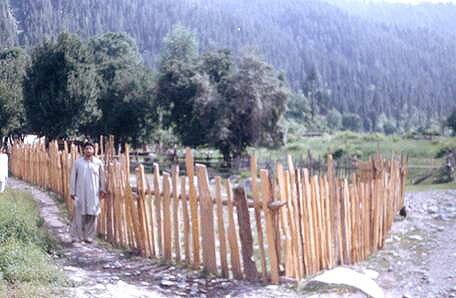
Fig 1. Traditional Field Fencing (Utror Village)
Table 2: Key and Summary to Ethnobotanical Uses of Plants
|
S.No
|
Key
|
Plant use description
|
Plant species
|
%age
|
|
1
2
3
4
5
6
7
8
9
10
11
12
13
14
15
16
17
18
19
20
21
22
23
24
25
26
27
28
29
30
31
32
33
34
35
36
37
38
39
40
41
42
|
Aest
AL
AT
Bask
Br
B
Cos
D
DC
Dec
Fd
Fenc
Fod
FP
Fr
Furn
FW
HBA
MI
MP
MW
Myth
Nam
Narc
O
Oil
PM
Pois
Ropes
SSB
SB
SC
SH
Sn
ST
St
TC
Tea
TR
U
V
VM
|
Aesthetics sense
Anti lice
Agricultural tools
Baskets making
Brooms
Bridges
Cosmetics
Dye
Dish cleaning
Decoration (home)
Feed
Fencing
Fodder
Fish poison
Fruits
Furniture
Fuel wood
Honey bee attractant
Match Industry
Medicinal plant
Mouth wash/Maswak
Mythological use
Naming
Narcotic
Ornamental
Oil
Packing material
Poisonous
Ropes
Snake and Scorpion bite
Soil binder
Spices and Condiments
Sticks/handles
Snuff ash
Shade tree
Sport tools
Timber/Construction
Tea
Thatching & Roofing
Utensil making
Vegetable
Veterinary medicine
|
1
2
8
2
2
3
3
2
2
2
1
10
33
2
19
8
29
8
2
133
8
6
10
3
10
4
2
6
2
5
1
16
3
1
3
1
8
1
5
3
24
18
|
0.56
1.13
4.54
1.13
1.13
1.70
1.70
1.13
1.13
1.13
0.56
5.68
18.75
1.13
10.79
4.54
16.47
4.54
1.13
75.56
4.54
3.40
5.68
1.70
5.68
2.27
1.13
3.40
1.13
2.84
0.56
9.09
1.70
0.56
1.70
0.56
4.54
0.56
2.84
1.70
13.63
10.22
|
|
Table 3: Ethnobotanical Profile of Utror and Gabral Valleys, District Swat, Pakistan
|
|
|
|
|
|
|
|
|
|
No.
|
Plant Name
|
L. Name
|
Family
|
Folk Uses
|
|
|
1.
|
Abies pindrow Royle
|
Chokar/Char
|
Pinaceae
|
TC; Furn; FW; Dec; MI; PM; Tea; Fenc.
|
|
|
2.
|
Achillea millefolium L.
|
Kingha
|
Asteraceae
|
MP
|
|
|
3.
|
Achyranthus aspera L.
|
Geskay
|
Amaranthaceae
|
MP; MW
|
|
|
4.
|
Aconitum chasmanthum Stapf ex Holmes
|
Zahar Mora
|
Ranunculaceae
|
MP; VM
|
|
|
5.
|
Aconitum heterophyllum Wall.
|
Sarba Zailay
|
Ranunculaceae
|
MP; Myth
|
|
|
6.
|
Aconitum violaceum Jacq. ex Stapf
|
Zahar Mora
|
Ranunculaceae
|
MP; VM
|
|
|
7.
|
Acorus calamus L.
|
Skhawaja
|
Araceae
|
MP
|
|
|
8.
|
Adiantum incisum Forsk.
|
Sumbal
|
Adiantaceae
|
MP
|
|
|
9.
|
Adiantum venustum D. Don
|
Sumbal
|
Adiantaceae
|
MP; O; SSB
|
|
|
10.
|
Aesculus indica (Wall. ex Cambl.) H. K.f
|
Jawaz
|
Hippocastanaceae
|
VM; Fod; Furn; AT; FW
|
|
|
11.
|
Ajuga bracteosa Wall. ex Benth.
|
Panrkash
|
Lamiaceae
|
MP
|
|
|
12.
|
Ajuga parviflora Benth.
|
Sasmay boti
|
Lamiaceae
|
MP
|
|
|
13.
|
Allium cepa L.
|
Piaz
|
Alliaceae
|
MP; V; SC; SSB; TR
|
|
|
14.
|
Allium humile Kunth
|
Palan
|
Alliaceae
|
MP
|
|
|
15.
|
Allium sativum L.
|
Ooga
|
Alliaceae
|
MP; Myth; V; TR
|
|
|
16.
|
Alnus nitida (Spach.) Endl.
|
Geiray
|
Betulaceae
|
FW; AT; SSB; Cos
|
|
|
|
17.
|
Amaranthus spinosus L.
|
Chalvary
|
Amaranthaceae
|
MP; V; Fod
|
|
|
18.
|
Amaranthus viridis L.
|
Chalvary
|
Amaranthaceae
|
MP; V
|
|
|
19.
|
Andrachne cordifolia (Dene) Muell.
|
Krachay
|
Euphorbiaceae
|
VM
|
|
|
20.
|
Anagallis arvensis L.
|
Chichra
|
Primulaceae
|
AL
|
|
|
21.
|
Apluda mutica var. aristata (L.) Hack.
|
Wakha
|
Poaceae
|
Fod
|
|
|
22.
|
Arisaema flavum Schott.
|
Marjarai
|
Araceae
|
Pois
|
|
|
23.
|
Artemisia scoparia Walds & Kit.
|
Jaa
|
Asteraceae
|
MP; Nam
|
|
|
24.
|
Artemisia vulgaris L.
|
Jaa
|
Asteraceae
|
MP; Fod; Br
|
|
|
25.
|
Artemisia biennis Willd.
|
Loam
|
Asteraceae
|
MP; SSB
|
|
|
26.
|
Asperugo procumbens L.
|
Barago
|
Boraginaceae
|
MP
|
|
|
27.
|
Astragalus anisacanthus Boiss.
|
Mamol
|
Fabaceae
|
MP; Fod; V
|
|
|
28.
|
Atropa acuminata Royle ex Miers
|
Barghak
|
Solanaceae
|
MP; Pois
|
|
|
29.
|
Berberis lycium Royle
|
Khawaray
|
Berberidaceae
|
MP; Fr
|
|
|
30.
|
Berberis vulgaris L.
|
Toor kwarray
|
Berberidaceae
|
MP
|
|
|
31.
|
Bergenia ciliata (Haw)Sternb.
|
Barmia
|
Saxifragaceae
|
MP; VM
|
|
|
32.
|
Betula utilis D. Don
|
Birch
|
Betulaceae
|
AT; U; FW; Fenc
|
|
|
33.
|
Boerhavia diffusa L.
|
Bashkhera/Ensut
|
Nyctaginaceae
|
MP
|
|
|
34.
|
Brassica campestris L. var. rapa
|
Tepar
|
Brassicaceae
|
MP; V
|
|
|
35.
|
Brassica oleracea L. var. botrytis
|
Gobee
|
Brassicaceae
|
V
|
|
|
36.
|
Bunium persicum (Boiss) Fedtsch.
|
Zeera
|
Apiaceae
|
MP; TR; SC
|
|
|
37.
|
Buxus wallichiana Baill.
|
Shamshad
|
Buxaceae
|
MP; Pois; MW; U; Nam
|
|
|
38.
|
Calendula arvensis L.
|
Charkeet
|
Asteraceae
|
MP; HBA
|
|
|
39.
|
Caltha alba Camb.
|
Makhan Path
|
Ranunculaceae
|
MP; MW; V
|
|
|
40.
|
Cannabis sativa L.
|
Bhang
|
Cannabidaceae
|
MP; Narc; Fd; Oil
|
|
|
41.
|
Capsicum annuum L.
|
Marchakay
|
Solanaceae
|
SC; MP
|
|
|
42.
|
Cardamine macrophylla Willd.
|
Bootai
|
Brassicaceae
|
MP; VM
|
|
|
43.
|
Cedrela serrata Royle
|
Meem
|
Meliaceae
|
MP
|
|
|
44.
|
Cedrus deodara (Roxb. ex Lamb.) G. Don
|
Loo/Diyar
|
Pinaceae
|
MP; TC; Furn; B; FW; Fenc.
|
|
|
45.
|
Chenopodium album L.
|
Udharam
|
Chenopodiaceae
|
MP; V
|
|
|
46.
|
Chenopodium botrys L.
|
Skha Harawa
|
Chenopodiaceae
|
MP
|
|
|
47.
|
Chenopodium murale L.
|
Chalwairay
|
Chenopodiaceae
|
V; Fod
|
|
|
48.
|
Chladophora crispata
|
Jaloos
|
Cladophoraceae
|
MP
|
|
|
49.
|
Cichorum intybus L.
|
Haspa bootay
|
Asteraceae
|
MP; V
|
|
|
50.
|
Clamatis gouriana Roxb. ex DC.
|
Zealai
|
Ranunculaceae
|
MP; Pois
|
|
|
51.
|
Coccinia grandis (L.) Voigt
|
Kanduri
|
Cucurbitaceae
|
MP; V; Fod
|
|
|
52.
|
Colchicum luteum Baker.
|
Suranjan-e-Talkh
|
Liliaceae
|
MP
|
|
|
53.
|
Convolvulus arvensis L.
|
Sahargul
|
Convulvolaceae
|
MP; Fod
|
|
|
54.
|
Conyza canadensis Conquist.
|
Malooch
|
Asteraceae
|
MP; VM
|
|
|
55.
|
Coriandrum sativum L.
|
Dhanyal
|
Apiaceae
|
MP; TR; SC; Oil; Nam
|
|
|
56.
|
Corydalis govaniana Wall.
|
Mamera
|
Fumariaceae
|
MP, Myth
|
|
|
57.
|
Cotoneaster nummularia Fisch. & Mey.
|
Karwara
|
Rosaceae
|
FW; TR; Fenc.
|
|
|
58.
|
Cuscuta reflexa Roxb.
|
Aamool
|
Cuscutaceae
|
MP; AL; Aest
|
|
|
59.
|
Cymbopogon stracheyi (Hk. f.) Raizada & Jain.
|
Sargaraey
|
Poaceae
|
Fod.
|
|
|
60.
|
Cynodon dactylon (L.) Pers.
|
Kabal
|
Poaceae
|
Fod; O; MP; Nam.
|
|
|
61.
|
Daphne mucronata Royle
|
Laighonai
|
Thymeliaceae
|
MP; Fr; FW; O
|
|
|
62.
|
Debregeasia saeneb (Forssk) Hepper & Wood.
|
Ajlai
|
Urticaceae
|
SC; Fenc; MP; Ropes
|
|
|
63.
|
Delphinium denudatum Wall. ex Hook. f. & Thoms.
|
Ghojab
|
Ranunculaceae
|
MP; O
|
|
|
64.
|
Dicanthium annulatum (Forssk.) Stapf.
|
Wakha
|
Poaceae
|
Fod.
|
|
|
65.
|
Dioscorea deltoidea Wall.
|
Kanis
|
Dioscoraceae
|
MP
|
|
|
66.
|
Diospyros lotus L.
|
Toor amlook
|
Ebenaceae
|
MP; FW; Fod; Fr
|
|
|
67.
|
Dryopteris juxtapostia Christ
|
Kwanjay
|
Pteridaceae
|
MP; V
|
|
|
68.
|
Echinops cornigerus DC.
|
Korayza
|
Asteraceae
|
MP
|
|
|
69.
|
Elaeagnus parviflora Wall. ex Royle
|
Ghanum rangai
|
Elaegnaceae
|
MP; FW; Fenc; Fr
|
|
|
70.
|
Ephedra gerardiana Wall. Ex. Stapf
|
Someni
|
Ephedraceae
|
MP
|
|
|
71.
|
Ephedra intermedia Schrenk & Meyer
|
Huma
|
Ephedraceae
|
MP
|
|
|
72.
|
Euphorbia prostrata L.
|
Warmaga
|
Euphorbiaceae
|
MP
|
|
|
73.
|
Euphorbia wallichii Hook. f.
|
Shangla
|
Euphorbiaceae
|
Pois
|
|
|
74.
|
Ficus carica L.
|
Inzar
|
Moraceae
|
MP; Myth; Nam; Fr; Fod; ST
|
|
|
75.
|
Foeniculum vulgare Mill.
|
Kaga
|
Apiaceae
|
MP; SC
|
|
|
76.
|
Fragaria nubicola Lindl. ex Lacaita
|
Zmakay Toot
|
Rosaceae
|
Fr.
|
|
|
77.
|
Fritillaria roylei Hook. f
|
Chor
|
Liliaceae
|
MP
|
|
|
78.
|
Fumaria indica (Haussk.) Pugsley
|
Papra
|
Fumariaceae
|
MP
|
|
|
79.
|
Galium aparine L.
|
Zealai
|
Rubiaceae
|
MP; Fod
|
|
|
80.
|
Geranium collinum Steph. ex Willd.
|
Chingalwani
|
Geraniaceae
|
MP
|
|
|
81.
|
Geranium wallichianum D. Don ex Sweet.
|
Rattan Jook
|
Geraniaceae
|
MP
|
|
|
82.
|
Hedera nepalensis Koch.
|
Palwarrizelai
|
Araliaceae
|
MP; O; Fod
|
|
|
83.
|
Hippophae rhamnoides Linn.
|
Sabak thaan
|
Elaegnaceae
|
FW; Fr
|
|
|
4.
|
Hyoscyamus niger L.
|
Shamala
|
Solanaceae
|
MP
|
|
|
85.
|
Hypericum perforatum L.
|
Shna Chai
|
Hypericaeae
|
MP
|
|
|
86.
|
Indigofera heterantha Wall. ex. Brand.
|
Ghoureja
|
Fabaceae
|
MP; Fod; Ropes; Br; FW; Fenc; Sn; HBA; Nam
|
|
|
87.
|
Ipomoea cairica (L.) Sweet
|
Sahargulay
|
Convulvolaceae
|
MP; Fod
|
|
|
88.
|
Jasminum humile L.
|
Zair Rambail Chambail
|
Oleaceae
|
MP; O; Nam
|
|
|
89.
|
Juglans regia L.
|
Ghuz
|
Juglandaceae
|
Fr; Furn; D; Nam; MP; Cos; MW; FW
|
|
|
90.
|
Juniperus communis L.
|
Ghoghar
|
Juniperaceae
|
MP
|
|
|
91.
|
Lamium album L.
|
Botae
|
Lamaiaceae
|
MP
|
|
|
|
92.
|
Lathyrus aphaca L.
|
Kukarmanay
|
Fabaceae
|
V; Fod
|
|
|
93.
|
Lathyrus cicera L.
|
Wara Chilo
|
Fabaceae
|
V; Fod
|
|
|
94.
|
Lathyrus pratensis L.
|
Zaira chilo
|
Fabaceae
|
V; Fod
|
|
|
95.
|
Lathyrus sativus L.
|
Ghata Chilo
|
Fabaceae
|
V; Fod
|
|
|
96.
|
Launaea secunda (C.B. Clarke) Hk.f.
|
Shodapai
|
Asteraceae
|
VM; DC
|
|
|
97.
|
Lespedeza juncea (L.F) Persoon
|
Oormaray
|
Fabaceae
|
MP; Fod
|
|
|
98.
|
Lycopersicon esculentum Mill.
|
Tamatar
|
Solanaceae
|
SC; V
|
|
|
99.
|
Malus pumila Mill.
|
Manara
|
Rosaceae
|
Fr; MP; AT; FW
|
|
|
100.
|
Malva sylvestris L.
|
Samchal
|
Malvaceae
|
V; MP
|
|
|
101.
|
Medicago polymorpha L.
|
Shpestaray
|
Fabaceae
|
MP; Fod
|
|
|
102.
|
Mentha longifolia (L.) Huds.
|
Villanay
|
Lamiaceae
|
SC; MP
|
|
|
103.
|
Mentha spicata L.
|
Dhoop/Podina
|
Lamiaceae
|
SC; V; MP; MW
|
|
|
104.
|
Micromeria biflora (Buch. Ham. ex D. Don) Benth
|
Narai Sja,alau
|
Lamiaceae
|
MP
|
|
|
05.
|
Morchella conica L.
|
Kasee/Gujai
|
Helveliaceae
|
MP; SC
|
|
|
106.
|
Morchella esculenta (L.) Pers.ex Fr.
|
Kasee/Gujai
|
Helveliaceae
|
MP; SC
|
|
|
107.
|
Morina longifolia Wall. ex DC.
|
Patti Ghana
|
Morinaceae
|
MP
|
|
|
108.
|
Morus alba L.
|
Speen toot
|
Moraceae
|
MP; Fr; Bask; Fur; FW; Fod; ST
|
|
|
109.
|
Morus nigra L.
|
Tor toot
|
Moraceae
|
MP; Fr; Bask; Fur; FW; Fod; ST
|
|
|
110.
|
Nasturtium officinale R. Br
|
Talmera
|
Brassicaceae
|
MP; VM
|
|
|
111.
|
Olea ferruginea Royle
|
Khona
|
Oleaceae
|
MP; Oil; Fr; AT; FW; Nam; Myth
|
|
|
112.
|
Onopordum acanthium L.
|
Shojesh
|
Asteraceae
|
Fod; FW
|
|
|
113.
|
Onosma bracteatum Wall.
|
Gaozaban
|
Boraginaceae
|
MP
|
|
|
114.
|
Onosma hispida Wall ex G. Don.
|
Ratanjot
|
Boraginaceae
|
MP
|
|
|
115.
|
Origanum vulgare L.
|
Karoolkach/Shamakay
|
Lamiaceae
|
MP
|
|
|
116.
|
Oxalis corniculata L.
|
Tarookay
|
Oxalidaceae
|
MP
|
|
|
117.
|
Paeonia emodi Wall. ex Hk.f.
|
Mamaikh
|
Paeoniaceae
|
MP
|
|
|
118.
|
Papaver somniferum L.
|
Apeem
|
Papaveraceae
|
MP; Narc; HBA
|
|
|
119.
|
Bistorta amplexicaule D. Don
|
Anjabar
|
Polygonaceae
|
MP; VM
|
|
|
120.
|
Picea smithiana (Wall.) Boiss.
|
Rawn
|
Pinaceae
|
TC; B; FW; PM; Fenc.
|
|
|
|
121.
|
Pimpinella stewartii (Dunn) Nasir
|
Gaiya
|
Apiaceae
|
MP
|
|
|
122.
|
Pinus wallichiana A. B. Jackson
|
Peeuch
|
Pinaceae
|
TC; Fur; MI; B; Dec; FW
|
|
|
123.
|
Pistacia integrrima J. L. Stewart ex Brand.
|
Shnai
|
Anacardiaceae
|
MP; TC; Fur; Fod
|
|
|
124.
|
Plantago lanceolata L.
|
Jabbai
|
Plantaginaceae
|
MP
|
|
|
125.
|
Plantago major L.
|
Maspal
|
Plantaginaceae
|
MP
|
|
|
126.
|
Plectranthus rugosus Wall ex Benth.
|
Burtus
|
Lamiaceae
|
MP; FW; Fod; HBA
|
|
|
127.
|
Podophyllum emodi Wall.
|
Banasher
|
Podophylaceae
|
MP
|
|
|
128.
|
Polygonatum verticilatum All.
|
Permole
|
Liliaceae
|
MP;VM
|
|
|
129.
|
Polygonum aviculare L.
|
Bandakay
|
Polygonaceae
|
MP
|
|
|
130.
|
Polygonum barbatum HM ex Meissn.
|
Palpulak
|
Polygonaceae
|
FP
|
|
|
131.
|
Populus alba L.
|
perdad
|
Salicaceae
|
FW; O; Fod
|
|
|
132.
|
Potentilla nepalensis Hook.
|
Spangja
|
Rosaceae
|
MP; MW
|
|
|
133.
|
Primula denticulata W. W. Smith
|
Zangali Surma
|
Primulaceae
|
MP
|
|
|
134.
|
Prunus armeniaca L.
|
Khubani
|
Rosaceae
|
Fr; FW; HBA; Fod
|
|
|
135.
|
Prunus domestica L.
|
Alucha
|
Rosaceae
|
Fr; SC; FW; Fod; HBA
|
|
|
136.
|
Prunus persica (L.) Batsch.
|
Shaltalu
|
Rosaceae
|
Fr; FW; Fod
|
|
|
137.
|
Punica granatum L.
|
Ananghorai/
|
Punicaceae
|
MP; MW; SC; Fr; FW; Nam; D
|
|
|
Anar
|
|
|
138.
|
Quercus baloot Griffith
|
Tor Banj
|
Fagaceae
|
MP; TC; FW; AT; SH
|
|
|
139.
|
Quercus dilatata Royle
|
Banj
|
Fagaceae
|
MP; TC; FW; Fod; AT; SH
|
|
|
140.
|
Quercus incana Roxb.
|
Speen Banj
|
Fagaceae
|
MP; TC; FW; AT; SH
|
|
|
141.
|
Quercus semecarpifolia Sm.
|
Meer
|
Fagaceae
|
MP; FW
|
|
|
142.
|
Ranunculus aquatilis L.
|
Jaghagha
|
Ranunculaceae
|
MP
|
|
|
143.
|
Ranunculus muricatus L.
|
Ghat Ziargulay
|
Ranunculaceae
|
MP
|
|
|
144.
|
Rheum australe D. Don
|
Chotial
|
Polygonaceae
|
MP; VM
|
|
|
145.
|
Rosa brunonii Lindl.
|
Zangaley Gulab
|
Rosaceae
|
O; SC; Fenc; HBA; Nam
|
|
|
146.
|
Rosa webbiana Wall. ex Royle
|
Palwari
|
Rosaceae
|
O; Fenc; HBA
|
|
|
147.
|
Rubus biflorus Ham. ex Sm.
|
Ach
|
Rosaceae
|
Fr
|
|
|
148.
|
Rumex chalepensis Mill.
|
Ovowal
|
Polygonaceae
|
MP; V
|
|
|
149.
|
Rumex hastatus D. Don
|
Tarookay
|
Polygonaceae
|
MP; SC; Fod
|
|
|
150.
|
Salix tetrasperma Roxb.
|
Wala
|
Salicaceae
|
FW; SB; St
|
|
|
151.
|
Salvia lanata Roxb.
|
Mattar jarrai
|
Lamiaceae
|
V
|
|
|
152.
|
Salvia moorcroftiana Wall. ex Benth.
|
Khardug
|
Lamiaceae
|
MP; MW
|
|
|
153.
|
Sarcococca saligna (D. Don) Muell. Arg.
|
Lughunai
|
Buxaceae
|
MP
|
|
|
154.
|
Saussurea lappa (Dene) Sch.
|
Kuth
|
Asteraceae
|
MP
|
|
|
155.
|
Senecio chrysanthemoides DC.
|
Ghopga
|
Asteraceae
|
MP; Pois; O; DC
|
|
|
156.
|
Silene vulgaris Garck
|
Tasurgha
|
Caryophyllaceae
|
MP; VM; V; Fr; Cos
|
|
|
157.
|
Sesbania sesban (L.) Merr.
|
Botay
|
Fabaceae
|
MP
|
|
|
158.
|
Skimmia laureola (DC.) Sieb. & Zucc. ex Walp.
|
Namer
|
Rutaceae
|
MP; Myth; VM
|
|
|
159.
|
Solanum surattense Burm. f.
|
Maraghonay
|
Solanaceae
|
MP; VM
|
|
|
160.
|
Solanum tuberosum L.
|
Aloo
|
Solanaceae
|
V
|
|
|
|
|
|
|
|
|
|
161.
|
Sorbaria tomentosa (Lindl.) Rehder
|
Berre
|
Rosaceae
|
MP
|
|
|
162.
|
Stellaria media (L.) Cyr.
|
Ululai
|
Caryophyllaceae
|
MP; VM
|
|
|
163.
|
Tagetes minuta L.
|
Zangali hamaysha
|
Asteraceae
|
MP; O
|
|
|
164.
|
Taraxacum leucanthum Ledeb.
|
Booda bodai
|
Asteraceae
|
MP
|
|
|
165.
|
Thymus linearis Benth.
|
Kaneesh
|
Lamiaceae
|
MP; VM
|
|
|
166.
|
Trachyspermum ammi (L.) Sprague
|
Spairkai
|
Apiaceae
|
MP
|
|
|
167.
|
Valeriana jatamansi Jones
|
Musk-e-bala
|
Valerianaceae
|
MP; SSB
|
|
|
168.
|
Valeriana pyrolifolia Decne.
|
Musk-e-bala
|
Valerianaceae
|
MP
|
|
|
169.
|
Verbascum thapsus L.
|
Kharghwag
|
Verbinaceae
|
MP; Nar; FP
|
|
|
170.
|
Viburnum cotinifolium D. Don
|
Kasarbotay
|
Caprifoliaceae
|
VM; Fr; FW
|
|
|
171.
|
Viburnum nervosum D. Don
|
Asos
|
Caprifoliaceae
|
MP; Fr; FW
|
|
|
172.
|
Viola betonicifolia Smith
|
Banafsha
|
Violaceae
|
MP
|
|
|
173.
|
Viola biflora L.
|
Banafsha
|
Violaceae
|
MP
|
|
|
174.
|
Viola canescens Wall. ex Roxb.
|
Banafsha
|
Violaceae
|
MP
|
|
|
175.
|
Withania somnifera (L.) Dunal
|
Dunal/Kutilal
|
Solanaceae
|
MP
|
|
|
176.
|
Xanthium strumarium L.
|
Geskay
|
Asteraceae
|
MP
|
|
DISCUSSION
The plant world is indispensable to human life. The green plants convert solar energy in to the first stage of most life giving and sustaining food chains. All our food comes from plants either directly or indirectly. Plants are used as medicine, fodder and forage for our cattle, fuel wood for cooking and heating purposes, timber for construction, flowers for aesthetics and other countless purposes. Plant cover protects soil from erosion and has a major effect on weather systems.
Ethnobotany is a multi-disciplinary science encompassing botany, anthropology, economics and linguistics, which study the ways in which a society relates to its environment. These relationships can be social, economic, symbolic, religious, commercial and artistic (Aumeeruddy and Pie, 2003).
Pakistan is blessed with diverse flora and climates. It has been estimated that more than 1000 plant species contain phyto-chemical properties while 350-400 plant species are traded in different local markets by 28 leading manufacturing units of Greco-Arabic, Ayurvedic and Homeopathic medicines. About 50,000 to 60,000 tabibs (practitioners of Greco-Arabic medicine) and a large number of unregistered practitioners scattered in rural and remote hilly areas of Pakistan utilize more than 200 plants as household remedies for curing several diseases. According to Haq (1983), Pakistan has about 40,000 registered practitioners of traditional medicine and majority of the population, especially villages, is getting health care by tabibs. It is estimated that 60% of the population use the herbal prescriptions of traditional practitioners.
Present study revealed that in Utror and Gabral, 174 plant species are used for different purposes by the local population. These ethnobotanically valued plants with their respective families, botanical name, local name, common names, habit, part used and local uses were documented. The plant resources are used by the people of Utror and Gabral for more than 41 different purposes. The major usage types include 135 medicinal plants, 30 fuel wood species, 30 fodder species, 26 vegetables and pot herbs, 20 veterinary medicinal plants, 20 fruit yielding plants, 17 spices and condiments, 17 for construction and timber requirements, 12 ornamental plant species and 10 used as mouth wash (Maswak). Figueiredo et al. (1993) reported that local plants are a very important resource for the community of Gamboa, located at Itacuruca Island, Sepetiba Bay, State of Rio de Janeiro, Brazil. Ninety species of plants, belonging to 40 families, are used for a variety of purposes, such as food, construction, handicraft, and medicine. Similarly, Shinwari and Shah (1996) study the ethnobotany of Kharan District, Baluchistan and observed that 171 species of angiosperms are used by local people for medicine, food, making houses, fodder, tool handles, axles, wheels, carts, ploughs, etc. The locally people totally depended on wild plants.
Most potential plant species are found to be used by the local population for multiple purposes. For instance, the bark Indigofera heterantha is used for relieving abdominal pain. Shoots serve as fodder for goats. Young branches are twisted into ropes, also tied to make brooms for cleaning roofs and lawns. The plant is also used as fuel wood, for thatching and fencing. Wood ash is used for making snuff, honey bee species. The plant is also used for naming i.e. Ghoreja. Hamayun (2003) observed that bulk of plant species in district Buner show multiple uses like Juglans regia wood is used for making furniture, gun woody parts, carving and as fuel. Root bark (Dandasa) is used for cleaning and sparkling teeth. Leaves are used by womenfolk for coloring lips (make-up). Nuts are edible and are traded to other parts of the country. The fruits are aphrodisiac and also used as dye. Decoction of leaves is given in eczema and intestinal worms. Similar type of research projects were also reported by Shinwari and Khan (1999) and Ahmad et al. (2004).
Many of today's drugs have been derived from plant sources. As modern medicine and drug research advanced, chemically synthesized drugs replaced plants as the source of most medicinal agents in industrialized countries. Although research in plant sources continued and plants were still used as the raw material for some drug development. , the dominant interest (and resulting research funding) shifted to the laboratory. The 1990s have seen a growing shift in interest once more; plants are re-emerging as a significant source of new pharmaceuticals. Industries are now interested in exploring parts of the world where plant medicine remains the predominant form of dealing with illness. Himalayas, for example, has an extraordinary diversity of plant species and has been regarded as a treasure grove of medicinal plants.
The primitive people of all ages had knowledge of medicinal plants which they acquire as a result of trail and error. This knowledge is still alive and several hundred species are used in herbal remedies in indigenous system of medicines, where the whole plant or plant or its extraction is used. The use of plants for the existence of human being is as old a practice as the human race itself. The accumulation of knowledge of plant use however co-evolved with human civilization through the experimental use of plants, generation after generation. The people of Utror and Gabral area like most other indigenous people relied on plant resources for their medicinal requirements and in this way a traditional system of folk recipes evolved in the area. More than 135 plant species are used for curing different ailments in the area and more than 62% of the population is still dependent on medicinal plants for primary health care. Different parts of the plant are utilized for medicinal purposes. For example the rhizome of Berberis lycium is used locally for body and bones pain. Rhizome bark is used for stomachache, strengthening sex organs and broken bones. The rhizome is dried and then crushed to powder. The powder is then mixed in a local sweet dish called Halwa. Some times the rhizome powder is administered with milk for giving relief in pains. Similarly the leaves of Mentha longifolia are used locally as stomachache, vomiting and acnes. The leaves are dried and then crushed. The powder of leaves is then used for treatment of stomachache and vomiting.. The use of plant as a source of traditional medicine was also reported by Shinwari et al. (2002), Sadaqat (1995) and Ahmad et al. (2004).
The world market for plant derived chemicals, pharmaceuticals, fragrances, flavours, and color ingredients, alone exceeds several billion dollars per year. Classic examples of phytochemicals in biology and medicine include taxol, vincristine, vinblastine, colchicine as well as the Chinese antimalarial, artemisinin, and the Indian ayurdevic drug forkolin. Trade in medicinal plants is growing in volume and in exports. It is estimated that the global trade in medicinal plants is US$ 800 million per year. The botanical market, inclusive of herbs and medicinal plants, in the USA, is estimated, at retail; at approximately US$1.6 billion per annum. China with exports of over 120,000 tonnes p.a., and India with some 32,000 tonnes per annum dominate the international markets. It is estimated that Europe, annually, imports about 400,000 tonnes of medicinal plants with an average market value of US$ 1 billion from Africa and Asia. A growing awareness of this new contributor to the foreign-exchange reserves of several national treasuries is beginning to emerge. To satisfy growing market demands, surveys are being conducted to unearth new plant sources of herbal remedies and medicines (Hoareau and Da silva, 1999). Majority of the worlds population currently depends on traditional medicine for their primary health and needs. Medicinal plants are widely used in household remedies and by practitioners of traditional systems of medicines, particularly in the developing world where public health care services may be limited. At the same time, interest in traditional and contemporary and alternative medicine in industrialized countries has grown rapidly. The world market for herbal products based on traditional knowledge is now estimated to be worth US$ 60 million (WHO, 2002).
In Utror and Gabral, 44 medicinal plants are collected during the months of May, June, July and August. Only 14 of them are traded to National and International markets while the rest are used locally. A survey by Pakistan Forest Institute concludes that 75 crude herbal drugs are extensively exported and more than 200 are locally traded in Pakistan. Indigenous people, who have no training in sustainable harvesting, post-harvesting care and storing of medicinal plants, collect 85 percent of these crude herbs from the wild. Such activity is causing a rapid depletion of medicinal plant resources. In addition, indigenous knowledge used to identify, evaluate and apply medicinal plants is dying out and no systematic documentation of the ethnobotanic information exists. According to recent estimates, 25 percent of all prescribed medicines in the developed world contain ingredients derived from plants and roughly 80 percent of the world's population living in the developing world relies on herbal remedies for their primary health care needs (Shinwari et al. 2003).
Shinwari and Khan (1998) observed that 26 medicinal plants collected from Margalla Hills National Park Islamabad, were sold in the market. According to Choudhary et al. (2000) about 500 families are involved in medicinal plant collection in Swat District and they collect 5000 tons of medicinal plants annually. However, no economic analysis exists to date for the marketing chain from collection to consumption systems. It is also necessary to know that how much plant material is collected and passing through the whole process of refinements how much quantity reaches to the market. It will give us the rough picture of the whole system from collection to consumption. It may also be the one reason of overexploitation of highly valuable and endangered medicinal plants. All available data is related to quantities traded in markets at a specific time and their approximate values.
It is observed in the remote areas that when females and children go to the forest for collecting fuel wood or grazing their live stock, they collect the medicinally important plants and make a bundle of it in their shawls or cotton or plastic bags. During market survey, it was noticed that there is a monopoly of few persons in the whole market at local as well as national level. While all other shops situated in an area sell drug plants at small scale. Due to this monopoly, these big dealers buy items from the locals on a very low price and sell them at very high prices in national markets.
Present study also revealed that about 4809.86 tones of valuable wood is used for cooking and warming houses annually. In summer season (from April to October) each person consume about 25kgs of fuel wood per month while during winter (from November to March) this amount increases to 60 kgs due to additional requirements of fuel wood for keeping their rooms warm. In Utror and Gabral, Cedrus deodara, Quercus dilatata and Pinus willichiana is under immense fuel wood pressure as bulk of the population of the area use these three plants for their fuel wood requirements. When asked why they use Cedrus deodara for heating rooms and cooking purpose in presence of other fuel wood species, an old man replied that he love to burn Deodar as it do not produce any sound during combustion process. Shinwari and Khan (1999) recorded that Acacia modesta, Acacia nilotica, Buxus pipiosa and Dodnaea viscosa are under fuel wood pressure in Margalla hills National Park, Islamabad.
Fuel wood gathering is considered to be the most important cause of forest destruction in Utror and Gabral valleys of upper Swat because the winter season is long and very harsh. People need fuel for heating and cooking. The local people are unaware about the conservation of valuable and indigenous plants of the area. They took axe, go to the nearest forests and cut trees. Sometime they cut whole tree for collecting only branches and twigs. Due to this indiscriminate cutting, not only the forest area is declining but valuable indigenous species are in danger and if this trend continues, the ultimate result would be the extinction of these species from the area.
The people of Utror and Gabral are poor and the prime sources of their income include farming and live stock keeping. The live stock includes buffaloes, cows, sheep, goats, donkeys and horses. There are more than 30 plant species which are used as fodder and forage in the area. In summer season, the live stock is carried to the upper grazing lands where they remain throughout the summer season. During summer, nomads along with their herds of sheep and goats come from surrounding areas and rent grazing lands from the Utroris community. These nomads, locally called Ajars, remain in the area throughout the summer season (March-November) and besides grazing their huge herds, also work as peasants for Utroris and cultivate potatoes. The lush green pastures are thus subjected to intense overgrazing and are converted to barren lands at the end of the season. During the winter season, the live stock is kept indoor because of heavy snow fall. During this season the local people face great difficulty due to fodder shortages for their live stock. Most of the livestock are faced with malnutrition during this period of the year. Rawat and Uniyal (1993) reported that alpine meadows of Jammu and Kashmir have shown the loss of great amounts of vegetation cover due to excessive summer grazing, and wide occurrence of unpalatable weedy species of Viburnum, Stipa, Sambucus, etc. Similarly, Khan (1994) studied the thorn forest area of the Punjab and its decline due to overgrazing, felling, wind erosion, desertification, salinity and water logging.
For improvement of fodder situation in Utror and Gabral, following suggestions are made.
Permanent pastures in the valley bottom should be improved.
Fodder crops should be introduced in the area on arable lands and it would bring an important additional fodder production possibility.
The alpine pastures contribute an important part of the whole year fodder requirement. Improvements are possible to some extent through controlled grazing.
All these measures on fodder improvement do not demand much investment but require enough understanding and adoption of appropriate management practices.
Present study showed that 17 plant species are utilized by the local people for timber and construction purposes. Most of the settlements in Utror and Gabral valley are made up of stones and mud, with supporting wood inside. The people live a semi-nomadic life style and their houses vary according to the prevailing conditions and duration of stay. Wood is used lavishly in the construction of houses. Traditionally the houses in the area has the same basic plan of roofing i.e. a layer of fine bushes and herbs just below the clay cover, a layer of branches from trees, a layer of small cross beams and large beams supporting the roof. Iqbal and Hamayun (2004) reported that 14 plant species are used for timber requirements of Malam Jabba valley, District Swat, Pakistan.
Plants are used as a prime source of veterinary medicine by people in different parts of the world since long times ago. The people of Utror and Gabral depend on plant resources for curing different diseases in their livestock. More than 20 plant species are known to be used by the people in the project area. An ethnobotanical study in Andhra Pradesh revealed that 106 plants were used to cure veterinary diseases (Sudarsanam et al,. 1995). Cousins (1995) also studied the antibacterial, antiviral and antifungal properties of plants. They are used in human medicine, veterinary medicine and in crop protection. Medicinal plants are an integral component of ethnoveterinary medicine. Farmers and pastoralists in several countries use medicinal plants in the maintenance and conservation of the healthcare of livestock. Intestinal disorders in cows, in Mexico, are treated with herbal extracts of Polakowskia tacacco. Dietary supplements such as vitamin A in poultry feeds in Uganda are supplied through enrichments of amaranth (Amaranthus sp.). It is estimated that medicinal plants, for several centuries, have been widely used as a primary source of prevention and control of livestock diseases. In fact, interest of such use in the veterinary sector has resulted primarily from the increasing cost of livestock maintenance and the introduction of new technology in the production of veterinary medicines and vaccines (Hoareau and Da silva, 1999).
Some people of the project area earn their live hood through Apiculture. There are more than 8 plant species which are utilized by honey bees for the production of honey. The honey collected is sold in the local market from where it is exported to other markets of Swat. Bee keeping is a useful activity which can also help in the conservation and economic stability of the people (Chemas and Gray, 1991). Rehman (1997) reported 130 honeybee plants from Peshawar and adjoining areas. Honeybee plants include both cultivated and wild plants. Iqbal (1991) observed that oriental bees do not colonize the hives as frequently as they did 10 to 12 years ago, possibly because the local bees are unable to compete with the 20,000 colonies of European bees (Apis mellifera) brought by the Afghan refugees into the tracts. Consequently, natural populations of the local bees have dwindled. To overcome the problem and to augment income of the rural people, it is recommended that modern beekeeping with European bees should be introduced among the traditional beekeepers.
Fruit plants also play a role in the economy of the people living in Utror and Gabral. Fruits are obtained from both cultivated and wild fruit plants. Apples, grapes and apricots were considered best fruits and also sold in the local markets. The fruits are also used as herbal medicine, food, syrups and for making wines. Walnut wood is used for making furniture while other fruit trees are used as fuel wood, thatching material and for making sheds and shelters. The leaves of most fruits are used as fodder while dead leaves are composted in to organic manure.
About 100% of the local population belongs to the religion of Islam. They use maswak (local tooth brush) for cleaning their teeth. The maswak is made from the rhizomatous parts or roots of certain plants. Women use bark and leaves of certain plants for cleaning their teeth. The root bark of walnut (locally called Dandasa) is collected extensively in the area for this purpose. A huge amount of Dandasa is also exported to the other parts of the country. Dastagir and Haq (1997) studied pharmacognosy of Acacia nilotica and Juglans regia, which are used as maswaks for teeth cleaning in various parts of Pakistan.
Other miscellaneous uses of plants include vegetables and pot herbs, spices and condiments, ornamental plant species, aesthetics sense, anti lice, agricultural tools, baskets making, brooms making, bridges, cosmetics, dye, dish cleaner, house decoration, feed, field fencing, fish poison, furniture, match industry, mythological use, naming, narcotic, oil production, packing material, poisonous plants, ropes, curing snake and scorpion bite, soil binder, sticks/handles, for making snuff ash, shade tree, sport tools, tea and for utensil making. Iqbal and Hamayun (2004) classified the plants of Malam Jabba in to medicinal plants, agro forestry based plants, vegetable and pot herb, ornamental, honey bee attractants, agricultural tool making, plants yielding edible fruits, thatching and sheltering, fencing and hedge plants, poisonous and timber yielding plants. Similar ethnobotanical projects were also reported by Ahmad et al. (2004), Hamayun (2003) and Shinwari and Shah (1996).
REFERENCES
Abbott, I. A. 1996. Ethnobotany of sea weeds. Clues to uses of seaweeds. Hydrobiol. 326-327: 15-20
Ahmad, H. and Sirajuddin. 1996. Ethnobotanical Profile of Swat. Proc. First Train. Workshop Ethnob. Appl. Conser., PARC, Islamabad. P: 202-211
Ahmad, H., S. Khan, A. Khan and M. Hamayun. 2004. Ethnobotanical resources of Manikhel forests, Orakzai Tirah, Pakistan. J. Ethnobot. Leaflets (http://www.siu.edu/~ebl/).
Ahmad. H. 2003. Cultivation and sustainable harvesting of medicinal and aromatic plants through community involvement. Intern. Workshop on conser. and sustainable uses of medicinal and aromatic plants in Pakistan. WWF, MINFAL and Qarshi Industries Pvt. Ltd. P: 1
Akerele, O., V. Heywood and H. Synge. 1991. Conservation of Medicinal Plants, Cambridge University Press Ltd., Cambridge, UK. P: 362
Alexopoulos, C. J. and C.W. Mims. 1984. Introductory Mycology. John Wiely and Sons, New York. P: 378-379.
Ali, S. I. and M. Qaiser. 1986. A phytogeographical analysis of the phanerogames of Pakistan and Kashmir. Proc. Royal. Soc. Edinburg. 89: 89-101
Ali, Z. 2002. Morels: The growing gold of Hindu Kush Himalayas. M. Hussain and Co. Mingora Swat. P: 13-21
Allan, N. J. R. 1992. Mountain environments: An assessment. Geo J. 27 (1): 5-11
Andrews, E. L. 1997. A Humble Herb as Rival to Prozac, Intern. Herald Tribune, Paris, France.
Anjara, J. 1996. Ethnoveterinary Pharmacology in India: Past, Present and Future. Ethnoveterinary Research and Development. Intermediate Technology Publications, London, UK. P: 137 147
Ansari, K. A., A. R. Malik and Q. A. Mahar. 1993. Survey of medicinal plants in district Khairpur, Sindh. Scientific Sindh. P: 54
Arshad, M. and S. Akram. 1999. Medicinal plants of University of Arid Agriculture, Rawalpindi. Hamd. Med. 42: 46-49
Aslam, M. 2002. Conservation, cultivation and trade of medicinal herbs and spices in Pakistan. International workshop on health challenges of 21st century and traditional medicines in SAARC region, Islamabad, Pakistan.
Aumeeruddy, Y. 1994. Representations etgestion paysannes des agroforets en peripherie du Parc National Kerinci Seblat a Sumatra, Indonesie. People and Plants working paper no 3, UNESCO, Paris.
Aumeeruddy, Y. 1996. Ethnobotany, linkages with conservation and development. Proc. First Train. Workshop Ethnob. Appl. Conser., PARC, Islamabad. Pp: 152-157.
Aumeeruddy, Y. and S. J. Pie. 2003. Applied Ethnobotany: case studies from the Himalayan region. People and plants working paper12. WWF, Godalming, UK. P: 3-4
Ayaz, M. 1999. Mushkbala (Valeriana jatamansi), medicinal uses and trade in Pakistan. Pak. J. For. 49: 1-11
Baart, J. L. G. 1997. The Sounds and Tones of Kalam Kohistani. National institute of Pakistan studies Quaid-i-Azam University and Summer Institute of Linguistics. P: 1-9
Badshah, L., F. Hussain and Z. Mohammad. 1996. Floristic and ethnoeclogical studies on some plants of Pirghar hills, South Waziristan, Pakistan. Pak. J. PI. Sci. 2 (2): 167-177
Bennett, B. C. 1992. Plants and people of the Amazonian rainforests. BIOSCIENCE. 42 (8): 599-607
Berlin, B., D. E. Breedlove, R. M. Laughlin and P. Raven. 1974. Principles of Tzeltal plant classification. Academic Press, New York and London.
Bhat, K. K. S. 1997. Medicinal plant information databases. Medicinal Plants for Forests Conservation and Health Care. FAO, Non-Wood Forest Products Series No. 11, FAO, Rome. P: 158
Bukhari, S. A. H. 1996. Uses of medicinal plants by community at Machyara National Park, Muzaffarabad, Azad Kashmir. Proc. First Train. Workshop Ethnob. Appl. Conser., PARC, Islamabad. P: 59-66
Bye, R. A. 1986. Medicinal plants of Sierra Madre: comparative study of Tarahumara and Mexican market plants. J. Econ. Bot. 40(1): 103-104
Caballero, J. 1992. Maya home gardens. Past, present and future. Ethnoecol. 1(1): 35-54
Captain, A. H., M. Mohan and A. D. G. Ramsay. 1981. Report on the tribes of Dir, Swat and Bajauar toghther with Utman Khel and Sama Ranezai. Saeed book Bank Peshawar. P: 75
Chadwick, D. J. and J. Marsh. 1994. Ethnobotany and the Search for New Drugs, CIBA Foundation Symposium 185; John Wiley and Sons, Chichester, UK. P: 280
Chaudhary, M., S. Ahmad, A. Ali, H. Sher and S. Malik. 2000. Technical report. Market study of medicinal herbs in Malakand, Peshawar, Lahore and Karachi. SDC-Intercooperation, Peshawar. P: 7
Chaudhri, M.N. and R. A. Qureshi. 1991. A checklist of rare and seriously threatened taxa of Pakistan. Pak. Syst. 5(1-2):1-84
Chemas, A. and V. R. Gray. 1991. Apiculture and management of associated vegetation of the Maya of Taxicacaltuyub, Yucatan, Mexico. Agroforest. Syst. 13 (1): 13-26
Chevallier, A. 1998. Materia Medica. Middlesex University, USA.
Colchester, M. 1996. Beyond "Participation": Indigenous Peoples, Biological Diversity Conservation and Protected Area Management, Unasiya. 47: 186
Conklin, H. C. 1954. The relation of the Hanunoo Culture to the plant world. Doctoral Dissertation, Yale University, New Haven. P: 252
Conklin, H. C. 1957. Hanunoo agriculture: A report on an integral system of shifting cultivation in the Philippines. FAO Forestry Development paper no. 12. FAO Rome. P: 169
Cousins, D. J. 1995. Plants with antimicrobial properties (antiviral, antifungal and antibacterial). International. P: 116-134
Cowling, R. M., I. A. W. Macdonald and M. T. Simmons. 1996. The Cape Peninsula, South Africa: Physiographical, biological and historical background to an extraordinary hot spot of biodiversity. Biodivers.-Conserv. 5 (5): 527-550
Cowling, R.M. and M. J. Samways. 1994 . Predicting global patterns of endemic plant species richness. Biodivers. Lett. 2 (5): 127-131
Dastagir, G. 2001. Pharmacognostic studies of Acacia nilotica L. and Juglans regia Wall. used as miswaks. Pak. J. PI. Sci. 3: 93-100
Davies, J. C. 1991. Conserving germplasm of world crop species and their relatives. Biol. J. Linn. Soc. 43 (1): 61-71
District Census Report. 1998. Population census organization, Statistics Division, Government of Pakistan, Islamabad. P: 198- 201
DCO. 2003. Statistics of Utror Union Council. Office of the district coordinating officer, Mingora, Swat. P: 21
DFO. 2002. Report on fuel wood consumption per year in Utror. Office of the divisional forest officer, Madyan, Swat. P: 13
EPB. 1999. Pakistans major exports of medicinal herbs and spices. Export Promotion Bureau of Pakistan.
EPB. 1996. Estimated annual production of important spices and condiments in Malakand Division during 1995-1996. Export Promotion Bureau, Mingora Swat, Pakistan.
Farooq, S. 1990. A review of medicinal plants of Pakistan. Sci. Khyber. 3(1): 123-131
Fay, M. F. 1994. In what situations is in vitro culture appropriate to plant conservation. Biodivers. Conserv. 3 (2): 176-183
Figueiredo, G. M., H. F. Leitao-Filho and A. Begossi. 1997. Diversity of plant uses at Sepetiba Bay (SE Brazil). HUM. ECOL. 25 (2): 353-360
Ford, R. I. 1978. The nature and status of ethnobotany. Anthropological papers, Museum of Anthropology, University of Michigan. No. 67
Ganesh, T., R. Ganesan, M. Soubadra-Devy. P. Davidar and K. S. Bawa. 1996. Assessment of plant biodiversity at a mid-elevation evergreen forest of Kalakad-Mundanthurai Tiger Reserve, Western Ghats, India. Curr. Sci. 71 (5): 379-392
Gill, A. M. and J. E. Williams. 1996. The effects of fragmentation of southeastern Australian eucalypt forests by urbanization, agriculture and pine plantations. For. Ecol. Manage. 85 (1-3): 261-278
Goodman, S. M. and A. Ghafoor. 1992. The ethnobotany of southern Balochistan, Pakistan with particular reference to medicinal plants. Fieldiana. 31: 145-153
Gopalan, C. 1976. Medicinal plants of India. Indian Council of Scientific and Industrial Research, New Delhi. V: 1
Gorman, C. 1992. The Power of Potions. Time, April 20. P: 52 53
Hamayun, M. 2003. Ethnobotanical studies of some useful shrubs and trees of District Buner, NWFP, Pakistan. J. Ethnobot. Leaflets (http://www.siu.edu/~ebl/).
Hamayun, M., A, Khan and M. A. Khan. 2003. Common medicinal folk recipes of District Buner, NWFP, Pakistan. J. Ethnobot. Leaflets (http://www.siu.edu/~ebl/).
Hamayun, M., M. A. Khan and S. Begum. 2003. Marketing of medicinal plants of Utror-Gabral Valleys, Swat, Pakistan. J. Ethnobot. Leaflets (http://www.siu.edu/~ebl/).
Hamid, S., A. W. Sabir, M. Saleem and T. A. Chaudry. 1997. Medicinal plants of family Datiscaceae. Hamd. Med. 40 (3): 62-63
Hamid, S., A. W. Sabir, M. Yamin and T. A. Chaudry. 1996. Medicinal plants of the plant families Salvadoraceae, Sapindaceae and Pedaliceae of Pakistan. Hamd. Med. 39 (3): 96-101
Hamilton, A. 2002. Curriculum development in applied ethnobotany. Proc. workshop on curriculum development in applied ethnobot. Nathiagali, Pakistan. P: 91-95
Haq, I. 1983. Medicinal plants. Hamdard Foundation Press, Pakistan.
Haq, I. 1993. Medicinal plants of Mansehera District NWFP, Pakistan. Hamd. Med. 34 (3): 51-86
Haq, I. and Z. Hussain. 1995. .Medicinal plant of Palandri, district Poonch (Azad Kashmirr). Pak. J. Pl. Sci. 1(1): 115-126
Hersch, M. P. 1995. Commercialization of wild medicinal plants from south west Pueba, Mexico. J. Econ. Bot. 49 (2), 197- 206
Heywood, V. H. 1992. Botanic gardens and conservation: New perspectives. OPERA-BOT. 113: 9-13
Hoareau, L. and E. J. Da silva. 1999. Medicinal plants: A re-emerging health aid. Elect. J. Biotech. V: 2
Hocking, G. M. 1958. Pakistan Medicinal Plants. T. Qual. Plant Mat. Veg. 6: 121-136
Hoft, M., S. K. Barik and A. M. Lykke. 1999. Quantitative ethnobotany: Applications of multivariate and statistical analyses in ethnobotony. People and plants working paper 6. UNESCO, Paris, France.
Hussain, F., A. Khaliq and M. J. Durani. 1996. Ethnobotanical studies on some plants of Dabargai hills, district Swat, Pakistan. Proc. First Train. Workshop Ethnob. Appl. Conser., PARC, Islamabad. P: 207-215
Huston, M. 1993. Biological diversity, soils, and economics. Science-Wash. 262 (5140): 1676-1680
Inam-ur-Rahim and A. Viaro. 2002. Swat, an Afghan Society in Pakistan. A joint publication of City Press and Graduate Institute of Development Studies, Geneva.
Iqbal, I. and M. Hamayun. 2004. Studies on the traditional uses of plants of Malam Jabba valley, district Swat, Pakistan. J. Ethnobot. Leaflets (http://www.siu.edu/~ebl/).
Iqbal, M. 1991. Non timber forest products; their income generation potential for rural women in North West Frontier Province (Pakistan). International Labor Organization and Govt. of NWFP. P: 46
IUCN. 1998. Environmental Synopsis of Pakistan.
IUCN. 2001. IUCN Red List Categories and Criteria: Version 3.1. IUCN Species Survival Commission. IUCN. Gland. Switzerland and Cambridge, UK. 2: 30
Kazmi, M. A. and I. A. Siddiqui. 1953. The drug plants of Kalat State. Pak. J. Forest. P: 217-237
Khaliq, A. 1995. Phytosociological and ethnobotanical studies on plant resources of dabergai hills, district Swat, Pakistan. M. Sc. Thesis, Deptt. Bot., Univ. Pesh., Peshawar, Pakistan.
Khan, A. A. 1985. Survey of crude drug markets in Pakistan. Biol.. Sci. Research Division, Bulletin 7, Pakistan Forest Institute, Peshawar.
Khan, A. A. 2003. Role of conservation of medicinal and aromatic plants in the socioeconomic development of rural poors. International Workshop on conservation and sustainable uses of medicinal and aromatic plants in Pakistan. Joint venture by WWF-P, MINFAL and Qarshi Industries Pvt. Ltd.
Khan, A. A. and J. L. Fevre. 1996. Indigenous Knowledge of Plants: A Case Study in Chitral. Proc. First Train. Workshop Ethnob. Appl. Conser., PARC, Islamabad. P: 136-151
Khan, A. A., R. A. Rajput and U. Khalid. 1996. Plants in coexistence with man and wildlife at Deosai, Himalayas. Proc. First Train. Workshop Ethnob. Appl. Conser., PARC, Islamabad. P: 26-42
Khan, A. U. 1994. History of decline and present status of natural tropical thorn forest in Punjab. Soil Conser. 67 (3): 205-210
Khan, L., N. Shafi, M. Yunis and M. Irfan. 1999. An overview of plants used in the traditional system of medicine for the control of diabetes. Hamd. Med. 42: 38-45
Khan, R. S. Q., S. Ahmad B. A. Khan. 1996. Impact/Solution of fuel shortage on Conser. of Biodiversity of Hindu-Kush Himalayas region of Pakistan. Proc. First Train. Workshop Ethnob. Appl. Conser., PARC, Islamabad. P: 171-176
Khan. R. M. R. 1996. Plants used by the local communities of people in the area of National Park Machyara. Proc. First Train. Workshop Ethnob. Appl. Conser., PARC, Islamabad. P: 51-58
King, S. and C. Veilleux. 2000. An Introduction to Ethnobotany. http://accessexcellence.org/RC/Ethnobotany/page2.html.
Kothari, A. 1998. Communities and Conservation, Natural Resource Management in South and Central Asia, Sage Publications, New Delhi. P: 56
Lama, Y. C., S. K. Ghimire and Y. Aumeeruddy-Thomas. 2002. Medicinal plants of Dolpo, Amchisknowledge and conservation. WWF-Nepal/People and plants, Katmandu. P: 150
Lanfranco, G. 1992. Popular use of medicinal pants in the Maltese Islands, Insula. (1): 34 35
Lemma, A. 1991. The potentials and challenges of Endod, the Ethiopian soapberry plant for control of schistosomiasis. American Association for the Advancement of Sciences (AAAS), Washington, D.C., USA.
Levi Strauss, C. 1962. La pensee sauvage. Plon, Paris.
Lozano, F. D., D. G. Herbada, L. M. Rivero, J. C. M. Saiz and H. S. Ollero. 1996. Threatened plants in Peninsular and Balearic Spain. Biol. Conserv. 76 (2): 123-133
Martin, G. J. 1995. Ethnobotany, a People and Plants Conservation Manual. Chapman and Hall, London, UK.
McGee, H. 1998. In victu veritas, Nature. 392: 649 650
Ministry of Environment, Local Government and Rural Development. 1997. Biodiversity Action Plan Pakistan.
Ministry of Environment, Local Government and Rural Development. 1997. Biodiversity Action Plan Pakistan, First Draft, MOELG&RD-IUCN-WWF.
Mukerji, B. 1953. The Indian Pharmaceutical Codex. Indigenous Drugs. Council of Scientific and Industrial Research, New Delhi, India. V: 1
Murdock, N. A. 1994. Rare and endangered plants and animals of southern Appalachian wetlands. Wetlands of the interior southeastern United States. Trettin, C. C.; Aust, W. M.; Wisniewski, J. eds. 77 (3-4): 385-405
Nasir, E. and S. I. Ali. 1971-95. Flora of Pakistan. Pak. Agric. Res. Council, Islamabad, Pakistan.
Osemeobo, G. J. 1992. Land use issues on wild plant conservation in Nigeria. J. Environ. Manage. 36 (1): 17-26
Pei, S. J. 1992. Mountain culture and forest resource management of Himalayas. Himalayan Ecosystem. Intel. Book Distr., Dehra Dun, India.
Phillips, O. L. B. and A. H. Gentry. 1993 a. The useful plants of Tambopata. Peru: Statistical hypothesis tests with a new quantitative technique. Econ. Bot. 47: 15-32
Phillips, O. L. B. and A. H. Gentry. 1993 b. The useful plants of Tambopata, Peru: Additional hypothesis testing in quantitative ethnobotany. Econ. Bot. 47: 33-43.
Phillips, O., A. H. Gentry, C. Reynel, P. Wilkin and B. C. Galvez-Durand. 1994. Quantitative ethnobotany and Amazonian conservation. Conserv. Biol. 8 (1): 225-248
Pie, S. J. and N. P. Manandhar. 1987. Sources of some local medicines in the Himalayan regions. Himalayan Ecosys. P: 97-112
Prance, G. T., W. Balee, B. M. Boom and R. L. Carneiro. 1987. Quantitative ethnobotany and the case for conservation in Amazonia. Conser. Biol. 1 (4): 296-310
Prober, S. M. 1996. Conservation of the grassy white box woodlands: Range wide floristic variation and implications for reserve design. Aust. J. Bot. 44 (1): 57-77
Qureshi, H. M. A. and S. Ahmad. 1996. Supply and regeneration of medicinal plants in Pakistan. Proc. First Train. Workshop Ethnob. Appl. Conser., PARC, Islamabad. P: 90-93
Qureshi, R. A., R. Somro, M. A. Khan and A. Rashid. 1997. A checklist of gymnosperms of Chitral District, NWFP, Pakistan and their ethnobotany. Hamd. Med. 40 (3): 44-54
Qureshi, S. J. and M. A. Khan. 2001. Ethnobotanical Study of Kahuta from Rawalpindi District Pakistan. J. Biol. Sci. 1(1): 27-30
Rawat, G. S. and V. K. Uniyal. 1993. Pastoralism and plant conservation: The valley of flowers dilemma. Environ. Conserv. 20 (2): 164-167
Rehman, S. and M. Kane. 1996. Indigenous knowledge for use of medicinal plants documentation through community participation. Proc. First Train. Workshop Ethnob. Appl. Conser., PARC, Islamabad. P: 113-118
Rehman, W. 1997. Bee flora at Peshawar. Pak. J. For., 47: 53-58.
Richardson, D. M., B. W. Van-Wilgen, S.I. Higgins, T. H. Trinder-Smith, R. M. Cowling and D. H. McKell. 1996. Current and future threats to plant biodiversity on the Cape Peninsula, South Africa. Bio. Divers. Conserv. 5 (5): 607-647
Rizvi, M. A., L. Ahmed and G. R. Sarwar. 1996. Wild medicinal plants of Madinat Al-Hikmah and its adjacent areas. Hamd. Med. 39 (4): 8-10
Sadaqat. 1995. Medicinal plants of family Cucurbitaceae (Part-2). Hamd. Med. 34: 91-101
Saeed, A. 1996. Cultivation of medicinal herbs at Madinat Al-Hikmah. Hamdard Medicus, 39 (1): 19-23.
Saleem A. Q., Z. Kapadia and S. Zahoor. 1994. Naturally occurring insecticides in indigenous plants. Hamdard Xxxvii (4): 27-39
Schippmann, U. 2001. Medicinal plants significant trade. CITES Project S-109, Plants committee document PC9 9.1.3. (rev.). BFN Skripten-39, Bundesamt fur Naturschutz, Bonn.
Shah, M. J., F. S. F. Tahir and W. Alam. 1997. Male contraceptives from traditional drugs (Plant Based). Hamd. Med. 40 (2): 34-36
Shah. M. and Z.K. Shinwari. 1996. Traditional uses of Potentilla species in Pakistan. Proc. First Train. Workshop Ethnob. Appl. Conser., PARC, Islamabad. P: 158-167
Shinwari, M. I. and M. A. Khan. 1998. Ethnobotany of Margalla Hills, National Park of Islamabad. Department of Biological Sciences Quaid-e-Azam University, Islamabad, Pakistan.
Shinwari, M. I. and M. A. Khan. 1999. Folk use of medicinal herbs of Margalla Hills National Park, Islamabad. J. Ethnopharm. 69: 45-56
Shinwari, Z. K. and M. Shah. 1996. The Ethnobotany of Kharan District, Baluchistan. Proc. First Train. Workshop Ethnob. Appl. Conser., PARC, Islamabad. P: 124-132
Shinwari, Z. K., S. S. Gilani 2003. Sustainable harvest of medicinal plants at Bulashbar Nullah, Astore, Northern Pakistan. J. Ethnopharm. 84: 289-298
Shinwari, Z. K., S. S. Gilani and M. Akhlas. 2002. Sustainable harvest of medicinal plants at Bar and Shinaki Valleys, Gilgit (Northern Pakistan). Consultancy Report: WWF-P, Gilgit.
Shinwari, Z. K., S. S. Gilani, M. Kohjoma and T. Nakaike. 2000. Status of Medicinal Plants in Pakistan Hindu-Kush Himalayas. Nepal-Japan joint symposium on conservation of natural medicinal resources and their utilization, Kathmandu, Nepal. P: 235-242
Siddiqui, K. M. and A. A. Khan. 1991. Proceeding of workshop on "Promotion of medicinal plants". PFI, Peshawar.
Simmons, M. T. and R. M. Cowling. 1996. Why is the Cape Peninsula so rich in plant species? An analysis of the independent diversity components. Biodivers. Conserv. 5 (5): 551-573
Singh, V. and R. P. Pandey. 1980. Medicinal plantslore of the tribals of eastern Rajastan, India. J. Econ. Bot. 1: 137-148
South, G. R. 1993. Edible seaweeds of Fiji. An ethnobotanical study. Bot. Mar. 36 (4): 335-349
Stewart, R. R. 1967. Check list of the plants of Swat State, Northwest Pakistan. Pak. J. Forest. 4 (2):457-528
Stucki, B. and H. A. Khan. 1999. Working plan for Utror-Desan forests of Kalam Forest Division. Nizam Printing Press, Peshawar.
Sudarsanum, G., M. B. Reddy and N. Nagaraju. 1995. Veterinary crude drugs in Rayalaseema, Andhra Pradesh, India. Int. J. Pharm. 33 (1): 52-60
Sultana, Z. K. Shinwari and F. Iftikhar. 1996. Diversity of edible mushrooms in Pakistan. Proc. First Train. Workshop Ethnob. Appl. Conser., PARC, Islamabad. P: 46-50
Tariq, P., Z. Kapadia, S. Ahmad and Y. Badar. 1995. Antimicrobial activity of some new species of medicinal plants of Karachi Region. Hamd. Med. 38: 70-78
Tilman, D., D. Wedin, J. Knops. 1996. Productivity and sustainability influenced by biodiversity in grassland ecosystems. Nature. 379 (6567): 718-720
Tuxill and G. P. Nabhan. 1998. Plants and protected areas. Stanley Thornes (Publishers) Ltd. P: 3-7
UNESCO. 1996. Culture and Health, Orientation Texts World Decade for Cultural Development 1988 1997, Document CLT/DEC/PRO, Paris, France. P: 129
UNESCO. 1998. FIT/504-RAF-48 Terminal Report: Promotion of Ethnobotany and the Sustainable Use of Plant Resources in Africa, Paris, France. P: 60
Viqar-uddin A. and A. Rehman. 1989. Pakistan Encyclopedia Planta Medica. University Grants Commission , Islamabad, Pakistan.
Walker, A. F. 1996. Of Hearts and Herbs, Biologist 43:177 - 180
WHO. 2002. Word Health Organization Traditional Medicine Strategy 2002-2005; Geneva.
Wickens, G. E. 1993. Vegetation and ethnobotany of the Atacama Desert and adjacent Andes in northern Chile. Opera-Bot. 121: 291-307
Williams, J. T. and Z. Ahmad. 1999. Priorities for medicinal plant research and development in Pakistan. P: 34
Wilson, E. O. 1992. The Diversity of Life. Belknap Press of Harvard University Press, Cambridge, UK.
Winter, J. H. S. and D. J. Botha. 1994. The release of endangered plants into the horticultural trade: Conservation or exploitation. Biodivers. Conserv. 3 (2): 142-147
World Bank. 1997. Medicinal Plants; Rescuing a Global Heritage. eds. Lambert, J., Srivastava, J. and Vietmeyer, N., Technical Paper. (355): 61
Young, A., T. Boyle and T. Brown. 1996. The population genetic consequences of habitat fragmentation for plants. Trends-Ecol. Evol. 11 (10): 413-418
Zaman, M. B. and M. S. Khan. 1970. Hundred drug plants of West Pakistan. Medicinal plants branch, PFI, Peshawar. P: 5-8
ANNEXURE-1
Questionnaire for Ethnobotanical Survey (General)
Date:
Name: Age: Gender:
Education: Locality:
Information about Potential Plant Species used in the Area
Local name of the species: Locality:
Uses in the Area:
Quantities harvested each year:
Who collect the plant? (Woman/Men/Children)
Why collected?
Which part is collected?
How the plant is collected:
Is it sold? To whom it is sold:
Whether the plant material is stored: Why?
For how long it is stored and why:
Local price per Kg. (Rs.): Quantity sold each year:
Availability status of the plant in last 10 years: (Increased/Decreased)
Any conservation effort on the part of locals:
Others Observations: